
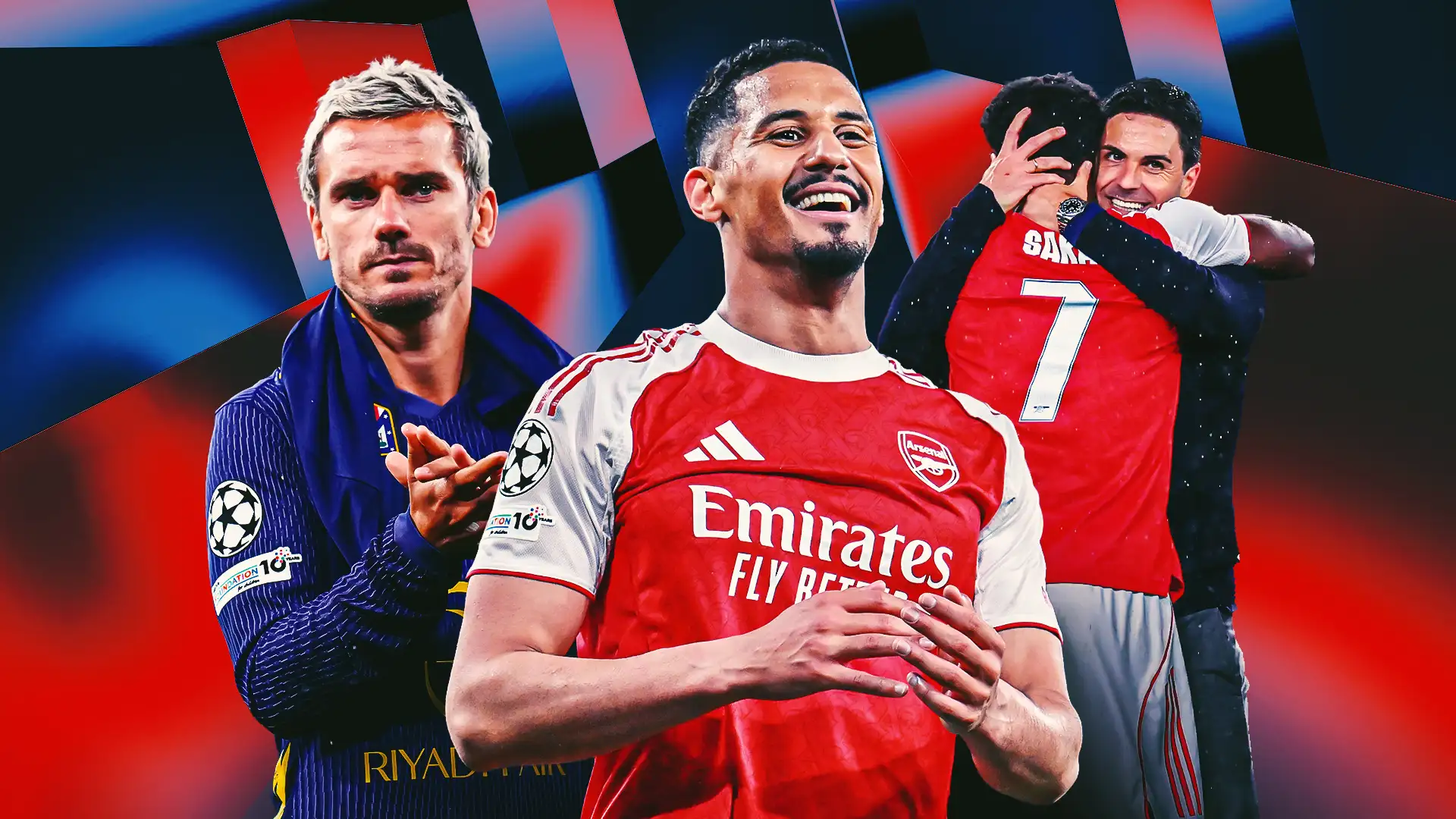
- Arsenal has officially reached the 2026 UEFA Champions League Final in Budapest, marking their first appearance in the showpiece event since the 2006 heartbreak against Barcelona.
- The Gunners have set a new European record in the 2025/26 campaign, going 14 matches unbeaten with 11 wins and 3 draws, boasting the best defensive record in the competition.
- Under Mikel Arteta, Arsenal’s market value has surged to €1.28 billion, driven by a world-class core including Bukayo Saka and William Saliba, the world’s most valuable defender.
Table of Contents
How has Arsenal’s 2026 Champions League journey broken European records?
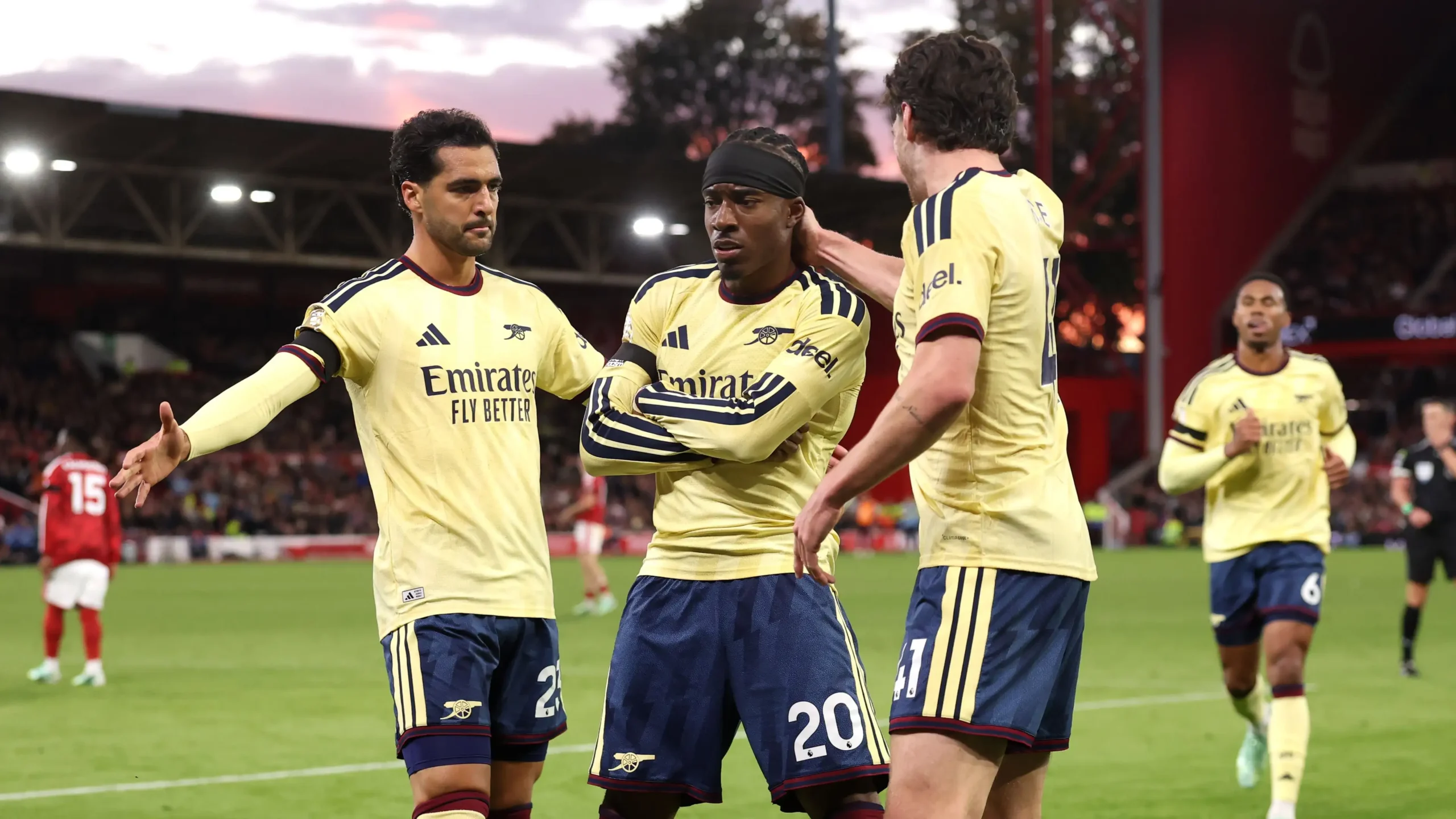
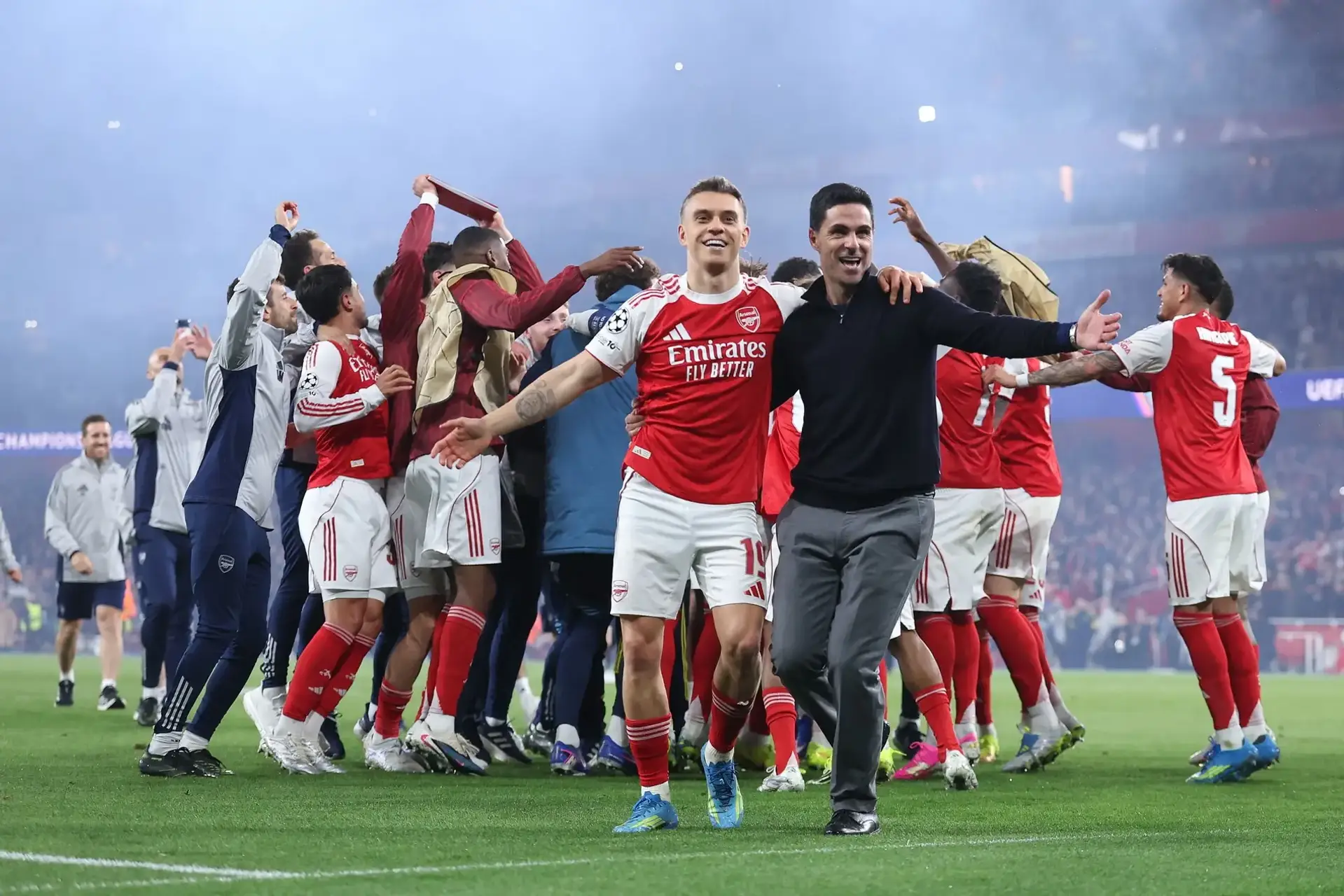
The 2025/26 campaign has redefined the Arsenal Champions League history, as the North London club stormed into the final at the Puskás Aréna with unprecedented dominance. Following a 2-1 aggregate victory over Atlético Madrid in the semi-finals on May 5, 2026, Mikel Arteta’s men became the first team in history to reach the final while remaining unbeaten through 14 matches in a single campaign.
Led by Viktor Gyökeres and Bukayo Saka, the Gunners recorded a perfect league phase, winning all eight matches—a feat never before achieved in the new format. Statistically, Arsenal has been a juggernaut, producing 26.32 Expected Goals (xG) while conceding just six goals in 14 games, reflecting a defensive structure that has been labeled the best in Europe by UEFA.
ALSO READ: Cristian Chivu Inter Milan Manager: His Journey From Player to Serie A Champion Coach
The road to Budapest saw Arsenal dismantle heavyweights like Inter Milan (3-1 away) and Bayer Leverkusen (3-1 aggregate) before the tense 1-0 second-leg win against Atleti at the Emirates. With Bukayo Saka scoring his 13th UCL goal to seal the final berth, the club is now just 90 minutes away from erasing 120 years of continental frustration.
What is the Arsenal Champions League history in full?
The Arsenal Champions League history began in earnest during the 1998/99 season under Arsène Wenger, yet for years, the club struggled to translate domestic “Invincibility” into European silverware. Despite qualifying for 19 consecutive seasons between 1998 and 2017, the Gunners often found themselves halted at the Round of 16 stage, particularly during the late 2000s and early 2010s.
The club’s best previous finish came in 2006, followed by a semi-final appearance in 2009 where they fell to Manchester United. Between 2011 and 2017, the Arsenal Champions League history was defined by a frustrating “glass ceiling,” as the team was eliminated in the Round of 16 for seven consecutive years by opponents like Bayern Munich, Barcelona, and AC Milan.
ALSO READ: Inter Milan Serie A Champions: Title Secured With Games to Spare
After a painful six-year absence from the competition (2017–2023), the modern era of Arsenal Champions League history was ignited by Mikel Arteta. Reaching the quarter-finals in 2024 and the semi-finals in 2025, the club has shown a year-on-year progression that culminates in the 2026 final, proving that the European “giant” has finally woken from its slumber.
Why did the 2006 Champions League final remain a scar for two decades?
May 17, 2006, remains the most bittersweet night in Arsenal Champions League history. Entering the final in Paris on the back of a record-breaking 10 consecutive clean sheets, the Gunners faced Frank Rijkaard’s Barcelona in a match that would haunt fans for twenty years.
The game turned in the 18th minute when goalkeeper Jens Lehmann was sent off, becoming the first player ever red-carded in a UCL final. Despite the disadvantage, Sol Campbell’s header put Arsenal in the lead, a position they held until the 76th minute before Samuel Eto’o and Juliano Belletti struck late to snatch the trophy.
ALSO READ: Wolves Relegated: End of the Road with Five Games to Spare
This loss marked the end of the legendary “Invincibles” era and began a long transition period for the club. For two decades, the 2006 final was the benchmark of “what could have been,” casting a shadow over every subsequent European campaign until the 2026 breakthrough in Budapest.
How did the 10-2 aggregate era stall Arsenal’s European ambitions?
If 2006 was the peak of the Wenger era, the period between 2015 and 2017 represented the lowest ebb in Arsenal Champions League history. The “banter era,” as dubbed by rival fans, saw Arsenal suffer humiliating exits, most notably the 10-2 aggregate shellacking at the hands of Bayern Munich in 2017.
These results led to a loss of European pedigree, as the club failed to attract top-tier talent and fell into the Europa League for six seasons. Financially, the absence from the Champions League cost the club an estimated €50 million per year in broadcasting and matchday revenue, forcing a total rethink of the club’s recruitment strategy.
It wasn’t until the appointment of Mikel Arteta and the clearing of the wage bill that the club began to repair its reputation. The subsequent investment in youth—bringing in players like Martin Ødegaard and Declan Rice—slowly shifted the narrative from “European pushovers” back to “Continental contenders.”
How has the Arteta-era rebuilt Arsenal into European heavyweights?
The transformation of Arsenal Champions League history under Mikel Arteta is a masterclass in long-term project building. By the 2025/26 season, Arsenal’s squad market value reached a staggering €1.28 billion, rivaling only Manchester City and Real Madrid.
Tactically, Arteta evolved the team from a possession-heavy but vulnerable side into a high-pressing, defensive machine. In the current 2026 campaign, Arsenal has maintained a 0.69 goals-conceded-per-game average across all competitions, recording 30 clean sheets in 59 matches—an efficiency rating higher than the 2006 finalists.
Key to this rebuild was the €115 million acquisition of Declan Rice and the emergence of William Saliba as the premier center-back in world football. The synergy between Arteta’s “non-negotiables” and the high-intensity sprint frequency of the front three (Saka, Martinelli, Gyökeres) has made Arsenal the most feared transition team in the 2026 Champions League knockout stages.
What are the statistical differences between the 2006 and 2026 squads?
Comparing the two most successful teams in Arsenal Champions League history reveals a shift from individual brilliance to collective tactical perfection. While the 2006 team relied on the magic of Thierry Henry and the grit of Patrick Vieira’s successors, the 2026 team is built on data-driven efficiency.
| Metric | 2005/06 Finalist | 2025/26 Finalist |
|---|---|---|
| Goals Scored (UCL) | 15 (in 13 games) | 29 (in 14 games) |
| Goals Conceded (UCL) | 4 (0.31 per game) | 6 (0.42 per game) |
| Clean Sheets | 10 | 9 |
| Leading Scorer | Thierry Henry (5) | Viktor Gyökeres (14) |
| Squad Market Value | ~€280m (adjusted) | €1.28bn |
The 2026 squad averages 113.7 km covered per match, significantly higher than the 2006 side, reflecting the modern game’s physical demands. Furthermore, the 2026 team’s Expected Assists (xA) of 18.13 suggests a much more creative and varied attacking threat than the counter-attack-heavy 2006 unit.
How does the 2026 final impact the Kenyan Gooner community?
In Nairobi and throughout Kenya, the Arsenal Champions League history is a shared cultural phenomenon. The “Kenya Gunners” supporter clubs, some of the most vibrant in Africa, have endured the two-decade drought with unwavering loyalty. The 2026 final in Budapest is expected to see record-breaking “watch parties” at iconic venues like The K1 Klub House and various sports hubs along Ngong Road.
Social media sentiment in Kenya has reached a fever pitch, with #ArsenalBudapest trending for hours. For Kenyan fans, this isn’t just about a football match; it’s the vindication of years of “suffering” through the banter era. Local analysts at SportsLeo Kenya suggest that an Arsenal victory would likely result in a 20% spike in jersey sales and a new wave of youth registrations at local football academies.
The atmosphere on the ground is one of nervous optimism. Unlike 2006, where the viewing experience was limited to terrestrial TV or expensive satellite subs, the 2026 final will be streamed in 4K across every smartphone in Nairobi, making it one of the most-watched sporting events in the country’s recent history.
SportsLeo Forecast: Will Arsenal finally lift the trophy in Budapest?
Based on our proprietary performance modeling, Arsenal enters the 2026 final as the statistical favorite. Their unbeaten run and the psychological boost of ending their 20-year wait give them a distinct edge. The “Arteta Effect” has cultivated a squad that does not “bottle” high-pressure situations, evidenced by their composure in the league race against Manchester City.
SportsLeo Forecast: We predict a 2-1 victory for Arsenal. The defensive pairing of Saliba and Gabriel is equipped to handle either the explosive pace of PSG’s front line or the clinical nature of Bayern Munich. If Bukayo Saka maintains his current High-Intensity Sprint Frequency, he will likely be the Man of the Match.
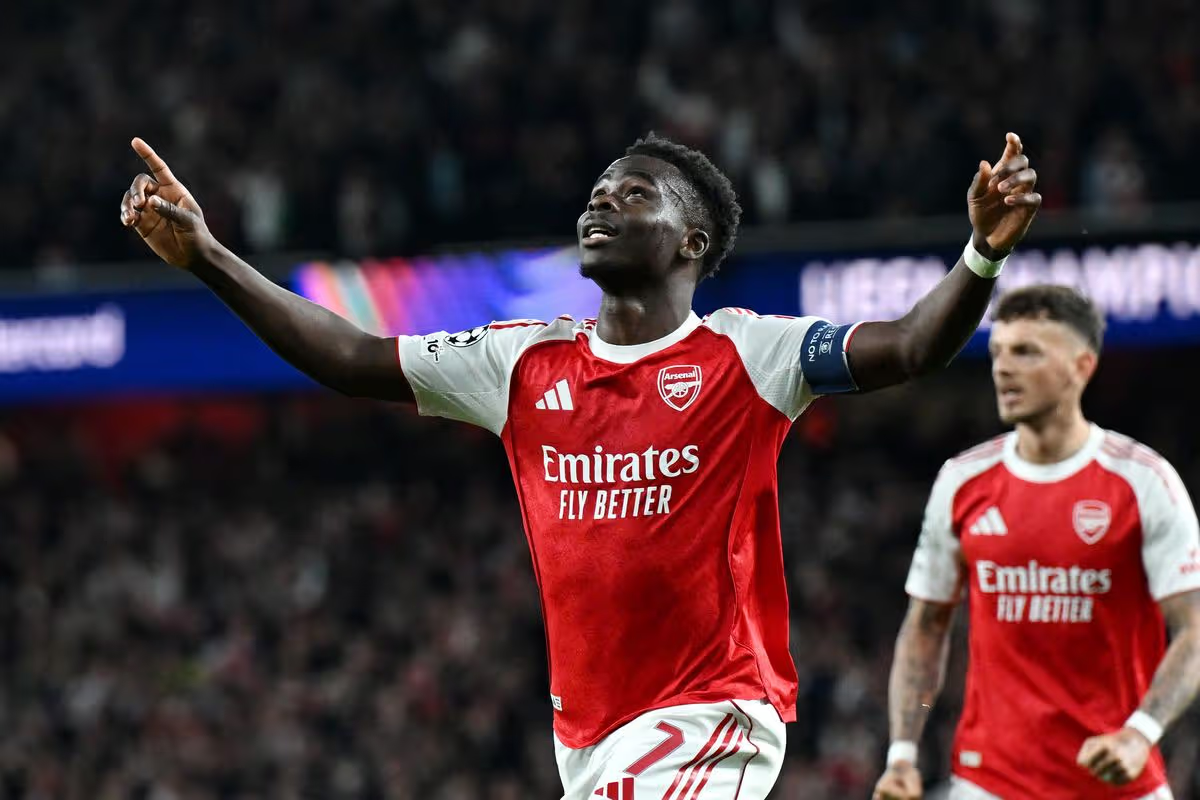
Regardless of the final score, the Arsenal Champions League history has already been rewritten. The club is no longer a “sleeping giant” or a “top-four aspirant”—they are officially back among the elite of European football, and the 2026 final is merely the beginning of their new era of dominance.
People Also Ask
Have Arsenal ever won the Champions League?
As of early May 2026, Arsenal has never won the UEFA Champions League. Their best result was finishing as runners-up in 2006.
When was Arsenal’s first Champions League final?
Arsenal’s first final was on May 17, 2006. It took place at the Stade de France in Paris, where they famously played with 10 men for the majority of the match.
Who did Arsenal face in the 2006 final?
Arsenal faced FC Barcelona in the 2006 final. Despite taking the lead through Sol Campbell, they lost 2-1 after two late goals from the Catalan giants.
Who is Arsenal facing in the 2026 final?
Arsenal will face either Paris Saint-Germain (PSG) or Bayern Munich in the 2026 final. PSG holds a 5-4 lead going into their second-leg clash on May 6, 2026.
What is Arsenal’s best Champions League result?
Before 2026, Arsenal’s best result was reaching the final in 2006. By reaching the 2026 final, they have matched that record, with the potential to surpass it by winning the trophy on May 30.