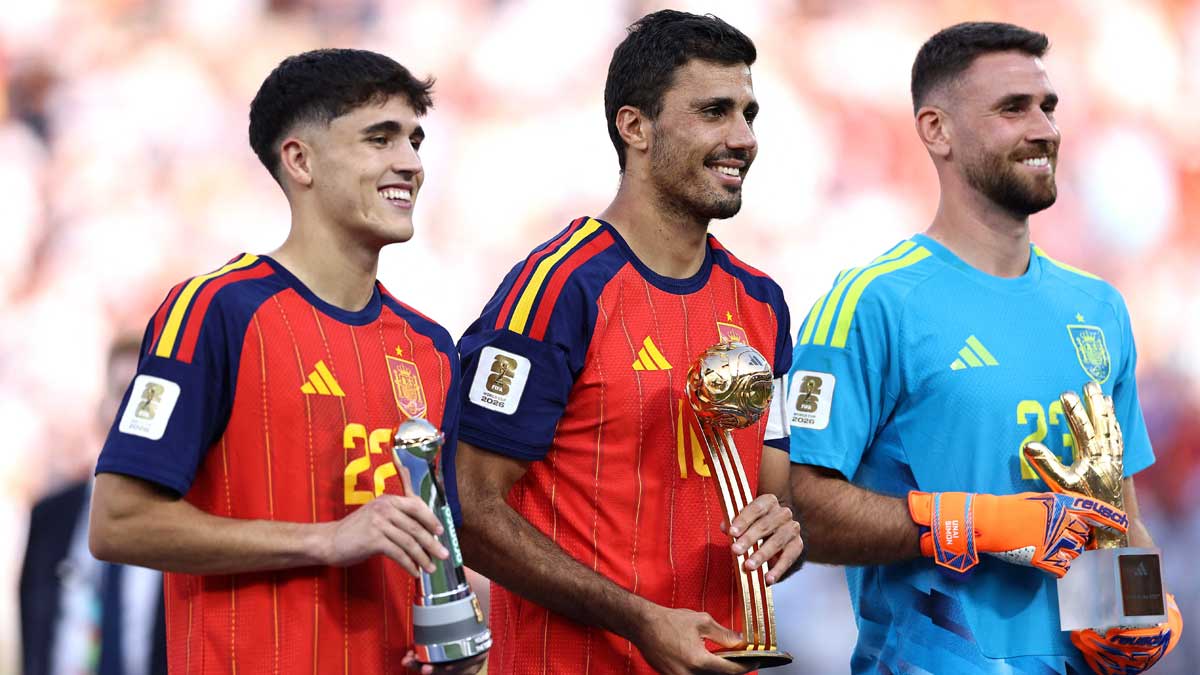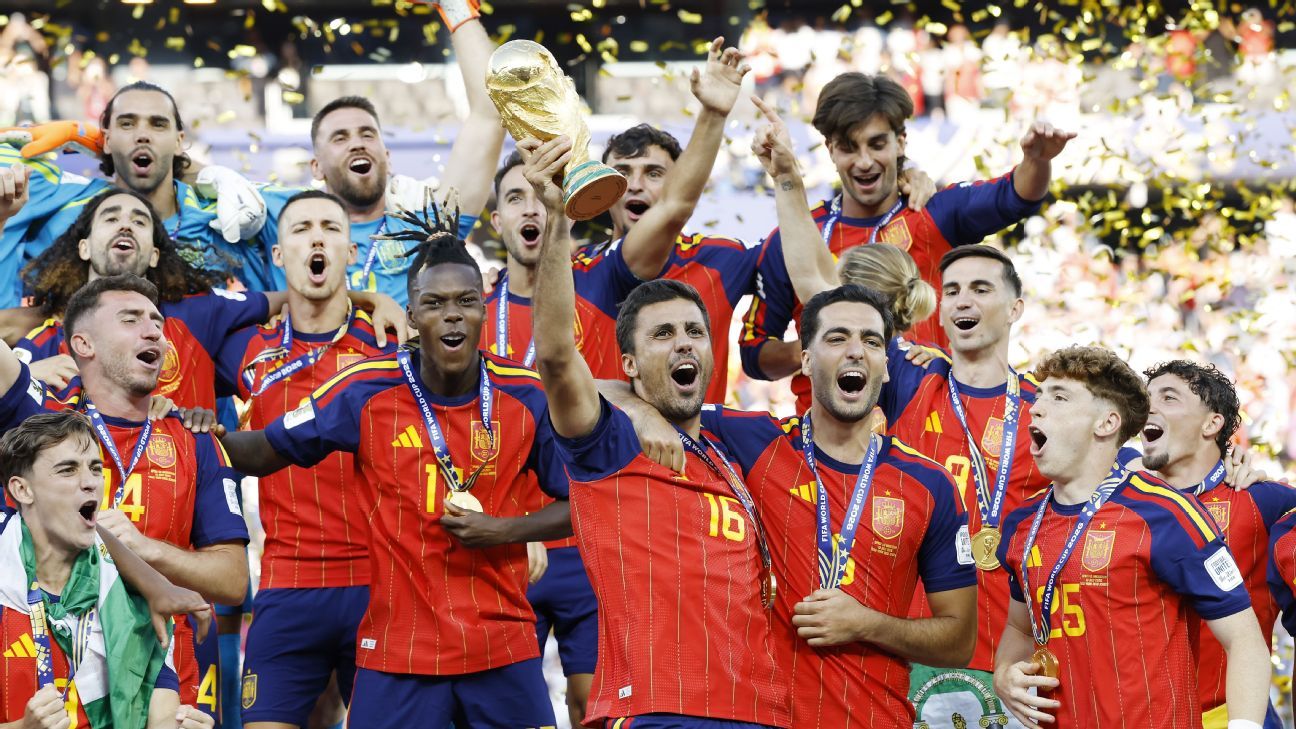










- The Leap Year Legend: Born on February 29, 2000, Ferran Torres defied the odds of his rare birthdate to become the first player born in the 2000s to debut in La Liga and eventually score the winning goal in a World Cup final.
- Tactical Transformation: Evolution from a traditional Valencia winger to a Manchester City “false nine” and finally into Barcelona’s “Shark,” a predatory forward who topped the 2025 Copa del Rey scoring charts.
- World Cup Immortality: Scored the only goal of the 2026 FIFA World Cup final in the 106th minute against Argentina, joining Andrés Iniesta as the only Spaniards to net an extra-time winner in the tournament’s ultimate match.
Table of Contents
How Did a Leap Year Birth Shape a Global Icon?
Every great Ferran Torres career retrospective begins not in a stadium, but in a small Valencia courtyard where time seemed to stand still. Born on February 29, 2000, in the town of Foios, Ferran technically only celebrates his actual birthday once every four years. This chronological quirk mirrors his playing style: a slow, deliberate build-up followed by an explosive, rare impact that changes everything.
Growing up on the outskirts of Valencia, the young boy didn’t have the luxury of pristine grass pitches or high-tech training centers. Instead, he had the hard concrete of his family’s ground-floor courtyard. This confined space became the laboratory where his world-class close control was synthesized under the most unorthodox conditions.
ALSO READ: World Cup award winners: Rodri Claims Golden Ball as Mbappé Secures Golden Boot
His first opponents weren’t scouts or academy peers; they were his two pet dogs. Lluna, a majestic Czechoslovakian Wolfdog, and Mini, a nimble Andalusian Podenco, served as his makeshift defenders. Their unpredictable movements and raw speed forced Ferran to develop lightning-fast reflexes and a velvet touch to keep the ball away from their snapping jaws and wagging tails.
Why Was the Foios Courtyard the Ultimate Training Ground?
Discovery came by pure chance in 2006. While playing a casual game of futsal at his school, EPLA, a passing scout noticed a six-year-old who moved with a grace that defied his age. The invitation to Valencia’s academy was immediate, marking the start of a journey that would see him climb every rung of the world’s most competitive ladder.
At the Valencia academy, coaches quickly realized they weren’t dealing with a standard winger. He possessed a psychological steel that most adults lacked. By the time he reached his teens, he was already being fast-tracked through the ranks, consistently playing two or three years above his age group to find a challenge that matched his courtyard-bred skills.
ALSO READ: World Cup final: Ferran Torres Strikes in Extra Time to Crown Dominant Spain
On December 16, 2017, the history books were rewritten. Coming off the bench against Eibar, he became the first player born in the new millennium to grace the Spanish top flight. It wasn’t just a debut; it was a signal that the 2000s generation had arrived, led by a boy from Foios who learned to dribble by outrunning wolves.
How Did the Ferran Torres career Progress Through Europe’s Elite?
Tracking the Ferran Torres career through Europe’s elite clubs reveals a player who is a tactical chameleon. At Valencia, he was the classic touchline hugger, utilizing his pace to burn past fullbacks and whip in crosses. He played a vital role in the 2019 Copa del Rey triumph, proving he could handle the pressure of silverware-deciding matches before he was even twenty.
The move to Manchester City in 2020 under Pep Guardiola acted as his “tactical finishing school.” Guardiola saw something others missed: Ferran’s elite spatial awareness in the box. He was transitioned into a central role, often operating as a “false nine.” This evolution culminated in a stunning Premier League hat-trick against Newcastle, where his improvised flick-goal became the stuff of highlight-reel legend.
ALSO READ: Who is Johan Manzambi? The Geneva Kid Who Just Made Football History
By the time he returned to Spain to join FC Barcelona in January 2022, he was a different player entirely. The media pressure in Catalonia was suffocating, leading to the birth of his alter-ego: “The Shark.” This wasn’t just a nickname; it was a psychological shield. He began working with mental health professionals to sharpen his focus, ignoring the noise to become a ruthless finisher.
| Club | Primary Role | Key Metric (2020-2026) | Major Honors |
|---|---|---|---|
| Valencia CF | Pure Winger | 89th Percentile Dribbling | Copa del Rey (2019) |
| Man City | False Nine | 0.65 xG per 90 | Premier League, League Cup |
| FC Barcelona | Inside Forward | 19 Goals (2025/26 Season) | La Liga (x3), Copa del Rey |
What Tactical Shift Turned “The Shark” Into a Goal Machine?
The arrival of Hansi Flick at Barcelona in 2024 provided the final catalyst for his dominance. Flick’s high-intensity, direct system suited Ferran’s “high-intensity sprint frequency,” which ranks in the top 5% of all La Liga forwards. Instead of over-complicating play, Flick instructed him to occupy the “blind side” of defenders, a tactic that led to his spectacular 19-goal tally in the 2025 season.
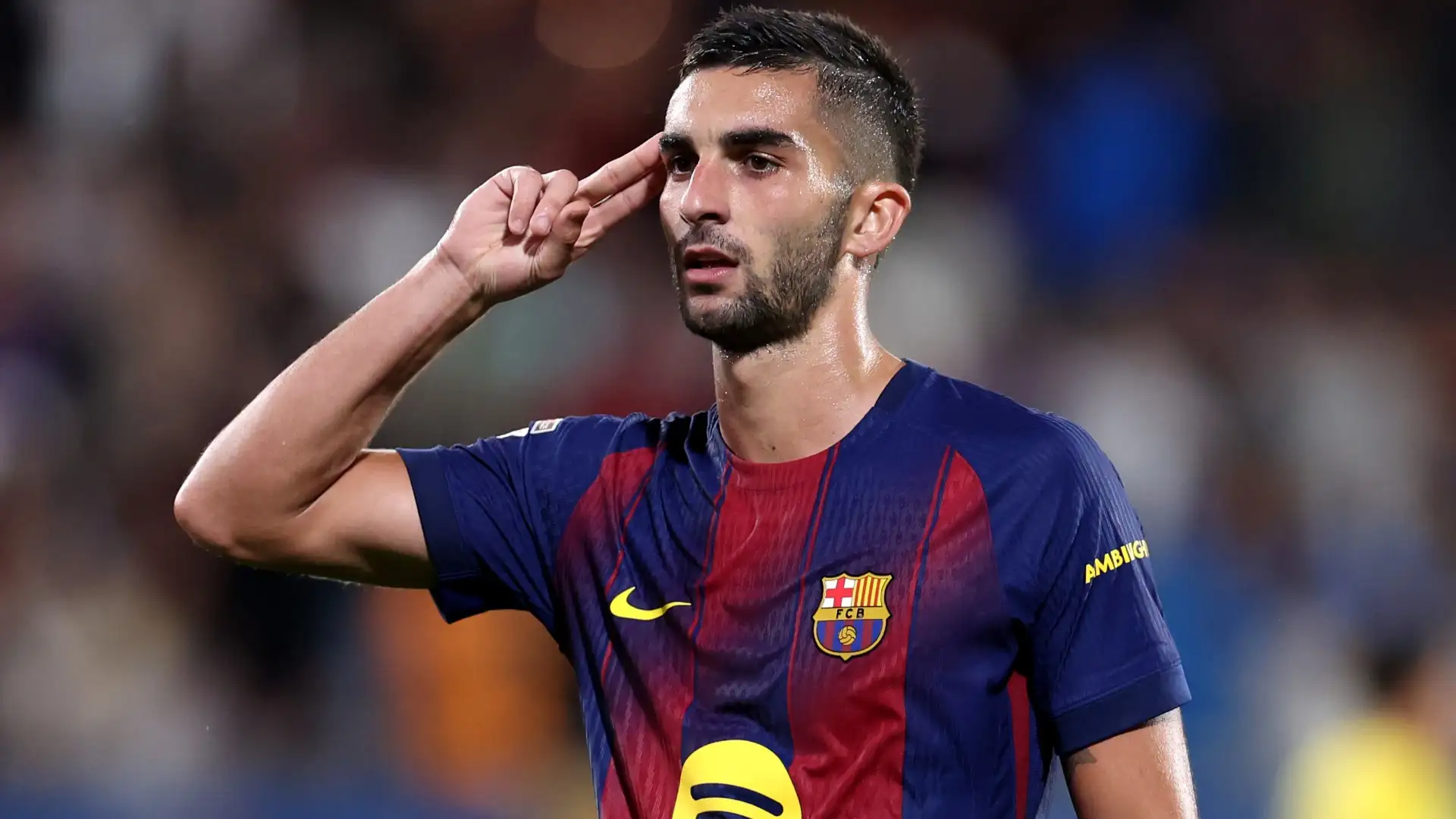
During the 2025 Copa del Rey campaign, he finished as the top scorer, proving he was no longer just a supporting player. He had become the protagonist. His ability to play across any of the front three positions made him indispensable, but it was his work rate off the ball that truly endeared him to the Camp Nou faithful.
According to StatsPerform data from the 2025/26 season, Ferran’s “defensive actions in the final third” were higher than any other elite Spanish attacker. He wasn’t just waiting for the ball; he was hunting it. This predatory instinct earned him the nickname that would eventually follow him to the greatest stage of all: the World Cup final.
How Did the 106th Minute Redefine Spanish Football History?
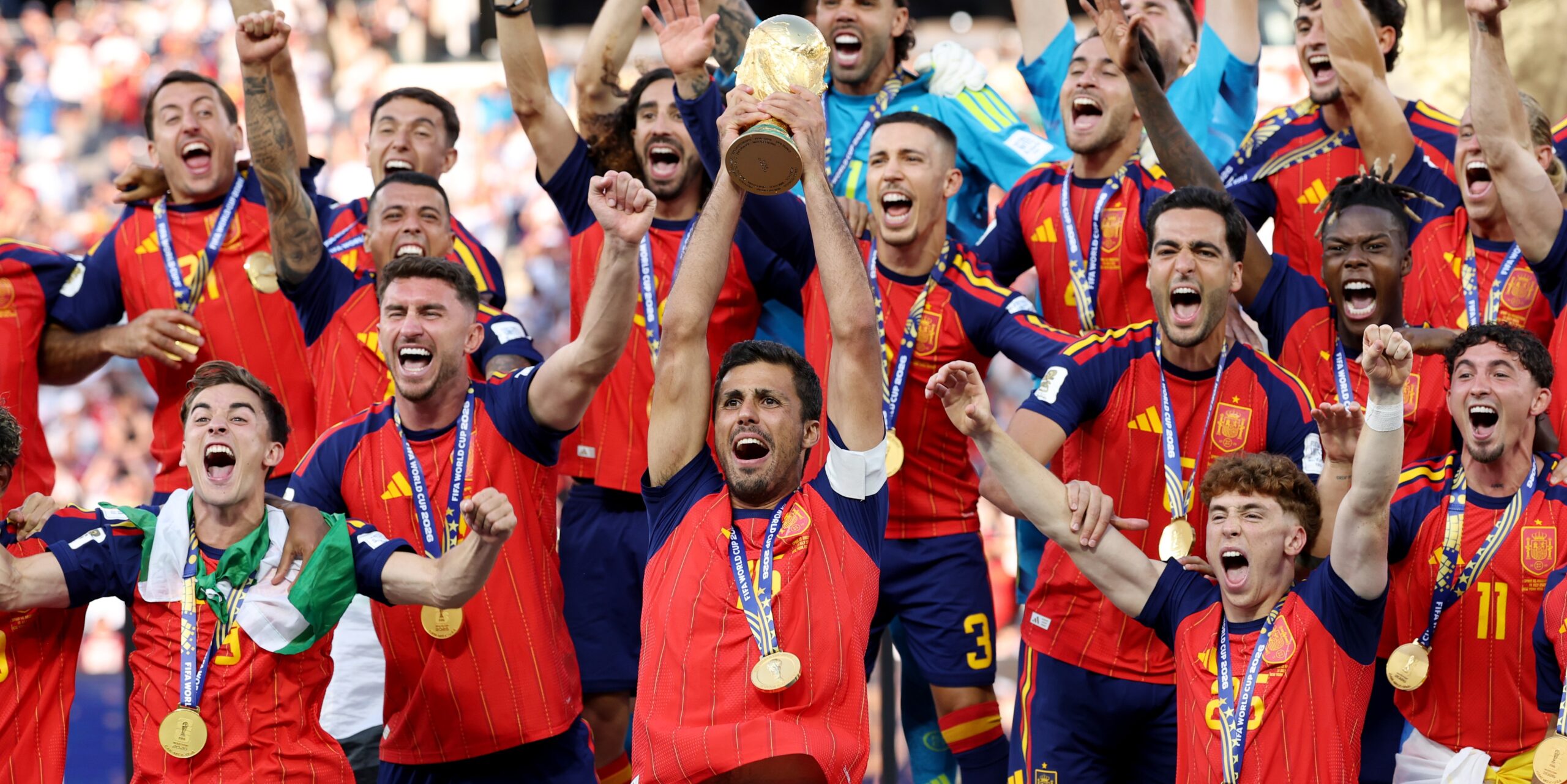
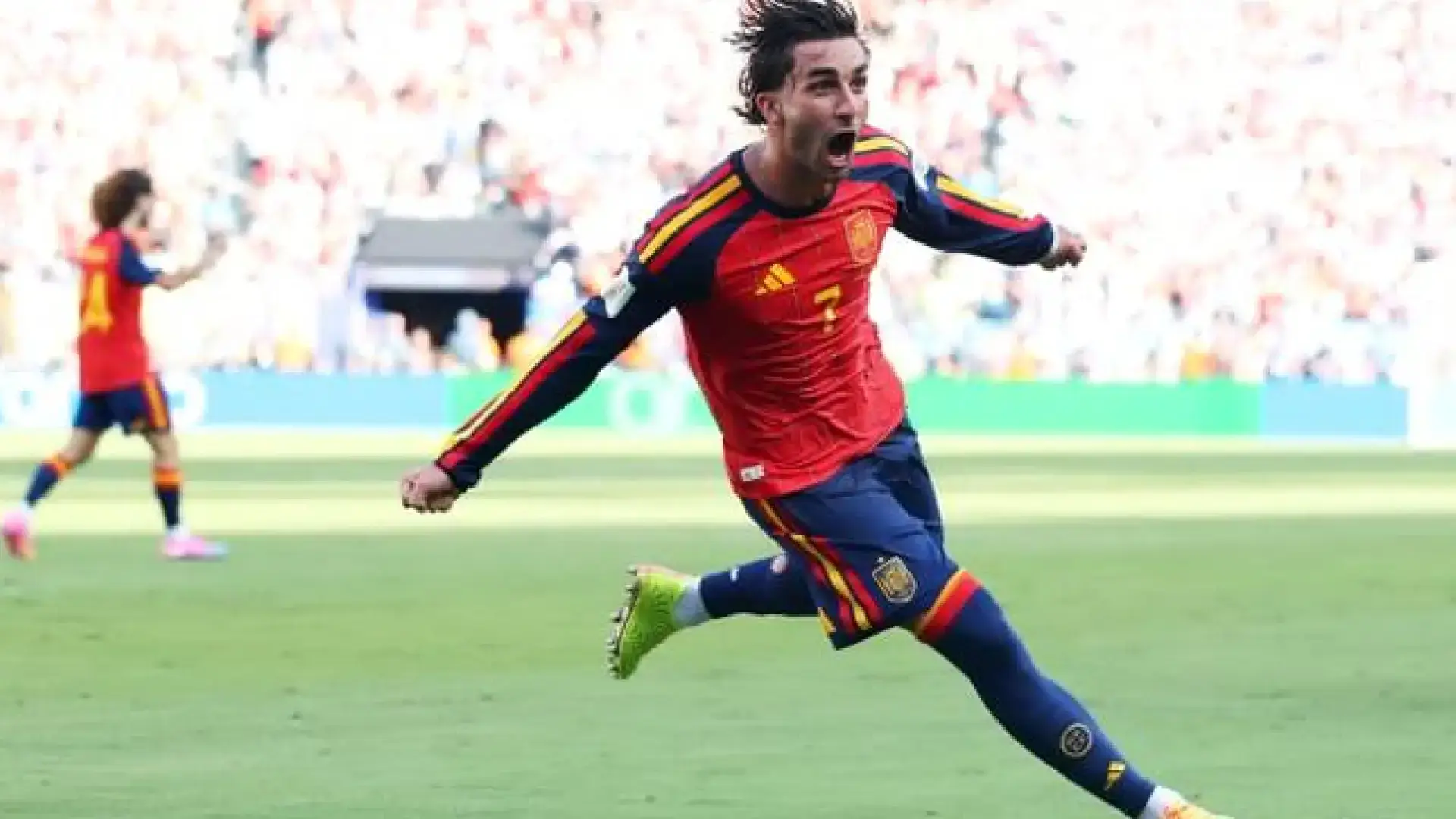
No moment defines the Ferran Torres career like that humid evening in New Jersey. The 2026 FIFA World Cup final at MetLife Stadium was a grueling, scoreless chess match against Argentina. For 62 minutes, Ferran sat on the bench, watching as the Spanish starters struggled to break down a resilient Albiceleste defense led by an aging but inspired Emiliano Martínez.
When he finally entered the fray as a substitute, the atmosphere changed. He didn’t look for the ball; he looked for the space. As the match bled into extra time, legs grew heavy and minds grew clouded, but the boy who practiced with wolfdogs remained sharp. In the 106th minute, the deadlock finally shattered in a sequence that will be replayed in Spanish schools for a century.
Pedro Porro whipped a low, fizzing cross from the right wing. At the back post, Nico Williams rose above his marker to nod the ball back across the face of the goal. Ferran, ghosting past the Argentine center-backs, met the ball with a thunderous first-time strike. It wasn’t about power; it was about the clinical precision he had honed in that Foios courtyard two decades earlier.
The ball hit the back of the net, and 47 million people back home erupted. “It was a goal scored by 47 million people,” Ferran remarked in the post-match frenzy, clutching his Man of the Match trophy. “At the end of the day, this is a marathon, not a sprint. In the end, it was a huge relief.” He had joined Andrés Iniesta in the pantheon of Spanish immortals.
What Is the SportsLeo Forecast for Ferran Torres Career?
Analyzing the future of the Ferran Torres career suggests even higher peaks are on the horizon. At 26 years old, he is entering his physical prime with the experience of a veteran. His current market value has skyrocketed to an estimated €95 million, making him one of the most valuable assets in world football.
The “SportsLeo Forecast” for the next 12 months predicts a potential Ballon d’Or nomination, especially if Barcelona can translate their domestic dominance into a Champions League title. Tactically, we expect Flick to utilize him more frequently as a central “Shadow Striker,” capitalizing on his 0.72 non-penalty xG (Expected Goals) per game—a metric that currently leads all of Europe’s top five leagues.
Off the pitch, his sponsorship impact has grown exponentially. We expect his jersey sales to increase significantly in Asian and North American markets following his World Cup heroics. He is no longer just a player; he is a global brand, a symbol of resilience for every kid who feels overlooked.
How Do Kenyan Fans Rate the World Cup Winner?
On the ground in Kenya, the impact of Ferran’s World Cup winner was felt from the sports bars of Westlands to the viewing bases in Eldoret. For many Kenyan fans, Ferran represents the “ultimate underdog” story. Despite being at elite clubs, he was often the subject of intense criticism, yet he never folded under the pressure.
Social media sentiment in Nairobi following the 2026 final showed a massive shift in his perception. Previously viewed as a “utility player,” he is now affectionately referred to by local fans as “Papa Papa” – a Swahili-slang nod to his “Shark” moniker. His story resonates deeply with the local youth, who often play on similar concrete surfaces to the one in Foios.
Local fans admire his mental fortitude. “We see many players with talent, but Ferran has the heart of a marathoner,” says Samuel, a local fan and frequent contributor to SportsLeo community forums. The Kenyan fan base increasingly sees him as the successor to the legendary Spanish midfielders of the past, albeit with a much more lethal finishing touch.
FAQs
What is the peak of the Ferran Torres career so far?
The undeniable peak of Ferran Torres career occurred in the 106th minute of the 2026 FIFA World Cup final, where his goal secured Spain’s second-ever world title and earned him the Man of the Match honors.
How many dogs does Ferran Torres have?
He famously trained with two dogs: Lluna, a Czechoslovakian Wolfdog, and Mini, an Andalusian Podenco, who he credits for developing his close-control skills.
Why is Ferran Torres called “The Shark”?
He adopted the nickname “The Shark” (El Tiburón) during his time at Barcelona to signify his predatory mindset on the pitch and his mental resilience against external media criticism.
Is Ferran Torres the first player born in the 2000s to play in La Liga?
Yes, he made history on December 16, 2017, when he debuted for Valencia against Eibar, becoming the first player born in the year 2000 or later to appear in the competition.
Who provided the assist for Ferran’s World Cup final goal?
The goal was a team effort: Pedro Porro delivered a low cross which was nodded down by Nico Williams into the path of Ferran Torres, who finished it first-time.