












- The Confirmation: Wolves relegated to the Championship with five games remaining in the 2025/26 Premier League season after West Ham United drew 0-0 with Crystal Palace.
- Season Statistics: The club managed a mere 17 points from 33 matches, plagued by a historically poor start that saw them go winless for the first 19 games of the campaign.
- Financial Impact: With an eight-year stay in the top flight ending, Wolves face a projected 40% drop in broadcast revenue and the potential departure of key assets valued at over £150 million.
- How Did a Stalemate at Selhurst Park Seal Wolves’ Fate?
- What Went Wrong Tactically During the 19-Game Winless Streak?
- How Do the 2026 Analytics Compare to Previous Premier League Seasons?
- Who is to Blame for the Poor Recruitment and Managerial Instability?
- What is the On-the-Ground Reaction from the Kenyan Wolves Fanbase?
- How Will Relegation Impact the Club’s Financial Future and Player Retentions?
- SportsLeo Forecast: Can Wolves Make an Immediate Return to the Top Flight?
The inevitable has finally been confirmed for the Molineux faithful. Following a season defined by missed opportunities and structural fragility, the news that Wolves relegated from the top flight has sent shockwaves through the West Midlands.
ALSO READ: Bayern vs Real Madrid: Bayern Knock Real Madrid Out of Champions League
The mathematical certainty arrived not through their own boots, but through a lackluster goalless draw between West Ham United and Crystal Palace at Selhurst Park on Tuesday evening. This result left Wolves 16 points adrift of safety with only 15 points left to play for, signaling the end of an era.
How Did a Stalemate at Selhurst Park Seal Wolves’ Fate?
The mathematics of the situation were cold and unforgiving. Entering the week, Wolves knew that anything other than a collapse from the teams directly above them would result in their demotion.
When the final whistle blew at Selhurst Park, confirming the 0-0 draw between the Hammers and the Eagles, the reality that Wolves relegated became official. The club remains rooted to the bottom of the table with a tally of just 17 points from 33 games.
ALSO READ: Will Tottenham Get Relegated? Separating Panic from Reality
Prior to this confirmation, the club suffered a demoralizing 3-0 defeat at the hands of Leeds United. That performance was a microcosm of their entire season: defensive lapses, a lack of midfield cohesion, and a toothless attack.
Despite having five games left on the calendar, the gap to the 17th position has grown to an insurmountable 16 points. This marks the earliest a team has been relegated in the Premier League era since the 2018/19 season.

The match result that confirmed Wolves’ relegation.
What Went Wrong Tactically During the 19-Game Winless Streak?
The foundation of this disastrous campaign was laid during a historically bad start. Wolves endured a staggering 19-game winless run to open the season, a streak that shattered player confidence and alienated the supporters.
Tactically, the team struggled to transition from a low-block counter-attacking system to a more expansive, possession-based approach. According to StatsPerform data, Wolves’ Expected Goals (xG) per match sat at a league-low 0.82 throughout the first half of the season.
Recruitment issues compounded these tactical failings. The club failed to replace veteran leadership in the dressing room, leaving a young squad without a compass during high-pressure moments.
ALSO READ: Coventry City Premier League Promotion 2026 Marks Return After 25 Years
Once the news broke that Wolves relegated, analysts pointed to the lack of high-intensity sprints as a key metric of their decline.
The team ranked 20th in the league for “successful pressures in the final third,” highlighting a passive defensive structure that allowed opponents to dictate the tempo of every game.
How Do the 2026 Analytics Compare to Previous Premier League Seasons?
Comparing the current squad to the Wolves teams of 2021-2024 reveals a startling regression in efficiency. In their peak years under previous management, the club maintained a Player Efficiency Rating (PER) that consistently ranked in the top half of the table.
In 2026, only two players maintained a PER above the league average. The following table illustrates the steep decline in performance metrics over the last three seasons.
| Metric (Average per Game) | 2023/24 Season | 2024/25 Season | 2025/26 Season |
|---|---|---|---|
| Goals Scored | 1.32 | 1.05 | 0.51 |
| xG (Expected Goals) | 1.45 | 1.18 | 0.82 |
| Big Chances Created | 2.1 | 1.4 | 0.7 |
| Points After 33 Games | 44 | 38 | 17 |
The statistical data confirms that the moment Wolves relegated was not a fluke but the culmination of a three-year downward trend.
The team’s inability to convert chances was particularly glaring; they missed 74% of their “Big Chances” as defined by FIFA technical reports. This offensive impotence, combined with a defense that conceded 2.1 goals per game, made survival a statistical impossibility.
 A Wolves player reacting to another home defeat.
Who is to Blame for the Poor Recruitment and Managerial Instability?
The buck stops with the board and the revolving door of managerial appointments. Since the departure of their long-term project manager two years ago, the club has cycled through three different head coaches, each with conflicting philosophies.
This instability meant that the news of Wolves relegated was seen by many as a failure of ownership rather than just the players. The recruitment strategy focused on high-potential youth from overseas leagues but neglected the “Premier League readiness” required for a relegation dogfight.
Instability in the dugout led to a fragmented locker room. Reports suggest that senior players were frustrated with the constant changes in training regimes and tactical instructions.
When the club finally confirmed that Wolves relegated with five games to spare, it became clear that the lack of a cohesive identity had been their undoing. The failure to secure a proven goalscorer during the January transfer window was the final nail in the coffin, leaving the squad without the firepower needed to bridge the 16-point gap.
What is the On-the-Ground Reaction from the Kenyan Wolves Fanbase?
While Molineux is the club’s physical home, the emotional fallout reaches as far as Nairobi and Mombasa. The Kenyan Premier League (KPL) has long seen a surge in interest for English football, and Wolves had built a respectable following in East Africa over their eight-year top-flight stay.
In the local “Banda” viewing centers of Nairobi, the mood is one of somber resignation. Many Kenyan fans were attracted to the club during their European excursions, and seeing Wolves relegated feels like a personal loss to a community that has followed every matchday with fervor.
Social media platforms in Kenya have been abuzz with debates regarding the club’s future. Local supporters often draw parallels between the struggles at Wolves and the institutional challenges faced by some KPL giants.
The consensus among the Kenyan fanbase is that the club lost its soul when it prioritized marketability over the grit that defined their early years in the Premier League.
For the fans in Eldoret who gathered every weekend to watch the “Old Gold,” the realization that their team will not be on the main broadcast roster next season is a bitter pill to swallow.
The atmosphere in Kenyan sports bars during the West Ham vs. Palace game was tense, followed by a quiet dispersal as the 0-0 draw was finalized.
This global reach highlights the magnitude of the club’s failure. As the news that Wolves relegated spreads through the digital spaces of Kenya, the conversation has already shifted to whether the club will continue its outreach programs in Africa while competing in the Championship.
The bond between the club and its international fans will be tested as they navigate the lower tiers of English football.
 Kenyan Wolves supporters reacting to relegation news.
How Will Relegation Impact the Club’s Financial Future and Player Retentions?
The financial consequences of the moment Wolves relegated are severe. The club is expected to lose approximately £60 million in television rights alone.
While parachute payments will provide a temporary safety net, the wage bill remains structured for a top-ten Premier League side.
This creates an immediate need for a “fire sale” of top talent to balance the books and comply with Financial Fair Play regulations.
Key assets, including their star Portuguese midfielder and Brazilian winger, are already being linked with moves to Champions League clubs.
Market values for the current squad have plummeted by an estimated 20% following the confirmation of demotion. The club’s total squad value, once peaking at £350 million, now sits closer to £190 million.
Beyond the players, sponsorship deals are also at risk. Major partners often have “relegation clauses” that allow for a reduction in payment or an outright exit if the club is no longer in the Premier League.
SportsLeo Forecast: Can Wolves Make an Immediate Return to the Top Flight?
What does the future hold now that Wolves relegated? History suggests that a quick return is possible but far from guaranteed.
The Championship is a notoriously difficult league to escape, often referred to as the “graveyard of giants.” Our predictive model suggests a 45% chance of Wolves making the playoffs in the 2026/27 season, provided they can retain at least 40% of their core squad and appoint a manager with a proven track record of promotion.
The “SportsLeo Forecast” for the next 12 months identifies the first 10 games of the Championship as critical.
If the club fails to clear the psychological hurdle of being “the big fish in a small pond,” they could face a multi-year stagnation. The focus must shift to rebuilding the scouting network and restoring a culture of accountability.
The End of an Eight-Year Odyssey
The news that Wolves relegated marks the conclusion of an eight-year journey that included European nights, giant-killing performances, and a period of genuine optimism. However, the 2025/26 season will be remembered as the year the wheels finally came off.
From the 19-game winless drought to the finality of the draw at Selhurst Park, the signs were there for all to see. The club now faces a crossroads: adapt and evolve, or risk fading into the background of English football.

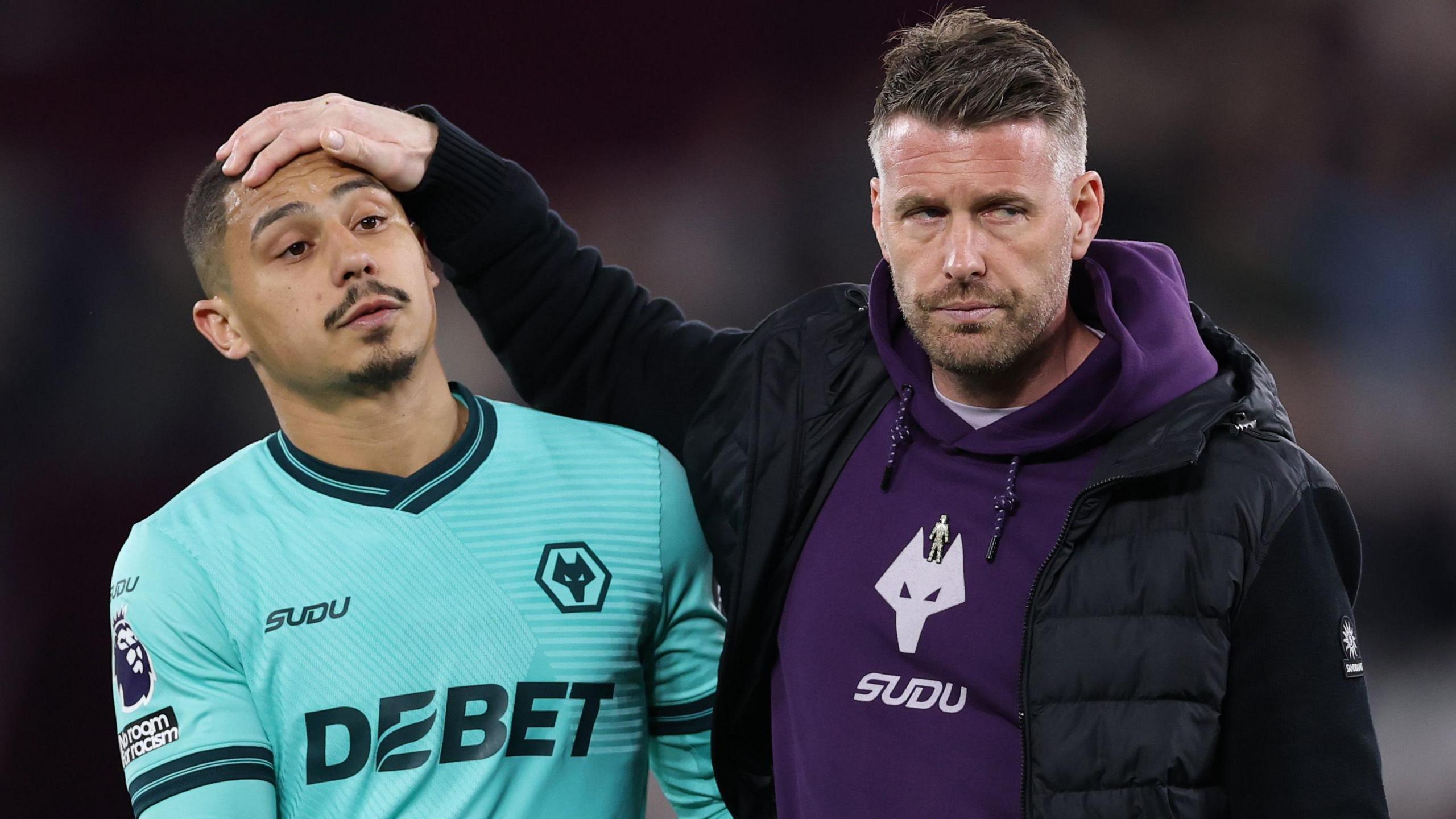
The emotional impact of Wolves being relegated.
People Also Ask
When was Wolves’ relegation officially confirmed?
Relegation was officially confirmed on Tuesday, April 21, 2026, after West Ham United drew 0-0 with Crystal Palace at Selhurst Park.
How many games did Wolves have left when they were relegated?
Wolves were relegated with five games remaining in the 2025/26 Premier League season, as they were 16 points away from safety.
What was Wolves’ longest winless run this season?
Wolves endured a historically poor start to the season, going winless for their first 19 games, which set the tone for their eventual demotion.
Which match result ultimately sent Wolves down?
While their own 3-0 loss to Leeds United brought them to the brink, it was the 0-0 draw between West Ham and Crystal Palace that mathematically sealed their fate.
How many points did Wolves have at the time of relegation?
Wolves had accumulated just 17 points from 33 games when their relegation to the Championship was confirmed.