- Match Outcome: South Africa secured a legendary 1-0 victory over South Korea through a Thapelo Maseko strike in the 63rd minute.
- Qualification Status: Bafana Bafana finish 2nd in Group A with 4 points, qualifying for the World Cup knockouts for the first time ever.
- Next Fixture: South Africa will face Canada in the Round of 32 at SoFi Stadium, Los Angeles, on June 28, 2026.
The tension during the South Africa vs South Korea clash was thick enough to cut with a knife as Hugo Broos and his men walked onto the grass at Estadio BBVA. This was more than a game of football; it was a date with destiny for a nation that had waited decades to see its team rub shoulders with the world’s elite in the knockout rounds. When the referee blew the final whistle in Monterrey, the scoreboard told a story of tactical perfection and pure African heart.
Table of Contents
What defined the South Africa vs South Korea group stage finale?
The air in Monterrey was heavy with expectation. South Africa entered this final Group A matchday knowing that only a positive result would keep their dream alive. They faced a South Korean side known for relentless energy and world-class individual talent. From the first whistle, it was clear that Hugo Broos had drilled his team into a disciplined machine. The 4-2-3-1 formation looked rigid yet flexible, designed to absorb the pressure that the Koreans were bound to apply.
ALSO READ: Scotland vs Brazil: Brilliant Vini Jr. Brace Seals 3-0 Win for Seleção
South Korea’s 3-4-1-2 system attempted to overload the wings, but Bafana Bafana refused to move. The first half was a tactical chess match. Teboho Mokoena sat deep, acting as a screen that the Asian giants simply could not penetrate. While South Korea held 58% of the ball in the opening 45 minutes, they managed zero shots on target. It was a masterclass in defensive shape that frustrated the Korean attackers and set the stage for a second-half explosion.
How did Hugo Broos outsmart the Korean technical setup?
Hugo Broos has often been criticized for his rigid selections, but on this night, he looked like a genius. He knew that South Korea relied heavily on the creative sparks of Lee Kang-in and the finishing of Son Heung-min. By deploying a double pivot of Mokoena and Bathusi Aubaas, Broos effectively cut the supply lines. The Korean midfield was forced to pass sideways, unable to find the vertical gaps they usually exploit.
ALSO READ: Portugal vs Uzbekistan 5-0: Cristiano Ronaldo Makes History as Seleção Thrash Uzbekistan
The tactical shift at halftime was subtle but effective. Broos encouraged his full-backs to push five yards higher, pinning the Korean wing-backs deeper into their own half. This move gave Thapelo Maseko more room to breathe. When Son Heung-min entered the fray at halftime, the world expected the tide to turn. Instead, Mothobi Mvala followed him like a shadow, proving that discipline often beats individual stardom in the heat of a World Cup battle.
What was the key moment in the South Africa vs South Korea match?
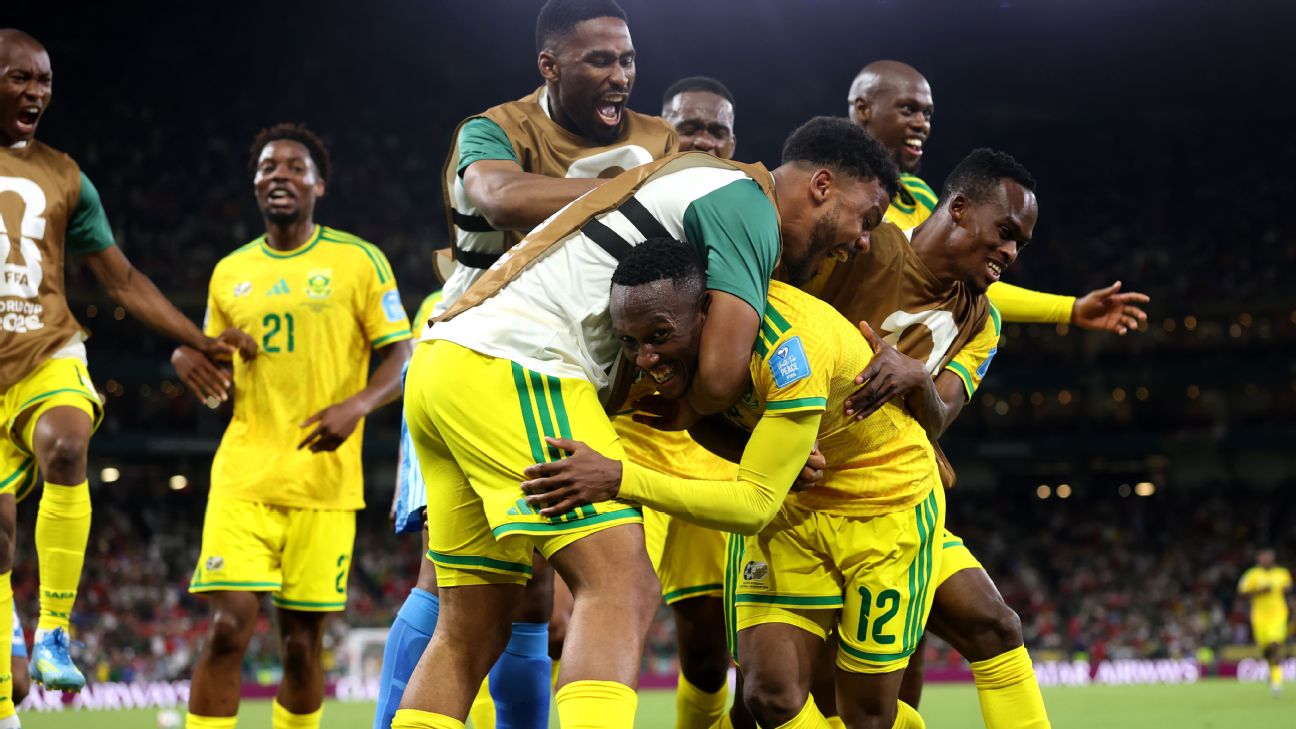
The clock hit the 63rd minute, and the South Africa vs South Korea narrative changed forever. After winning the ball back in their own third, Bafana Bafana moved with a directness that caught the Korean defense sleeping. A measured, searching ball carved through the center of the pitch, finding Thapelo Maseko in a pocket of space. The stadium held its breath as the young winger took a touch that set him perfectly.
Maseko didn’t panic. He stared down the keeper and fired a crisp, low finish that rattled the back of the net. The South African bench emptied in a blur of yellow and green. It was the breakthrough they had worked for since the opening matchday. That single moment of clinical finishing was the difference between going home and making history. For the rest of the game, that goal acted as a shield that the Korean Republic could not break through.
ALSO READ: Scotland vs Brazil: Brilliant Vini Jr. Brace Seals 3-0 Win for Seleção
According to data from the match, Maseko’s goal came from an Expected Goals (xG) value of just 0.34, highlighting the sheer quality of his finish under pressure. This efficiency is exactly what has been missing from South African football on the world stage for years.
How did Bafana Bafana’s defense neutralize Son Heung-min?
Neutralizing an elite talent like Son Heung-min requires more than just one player; it requires a collective effort. During the South Africa vs South Korea encounter, the defensive unit operated as a single organism. Whenever Son touched the ball, he was immediately greeted by two layers of defense. The primary task fell to Mothobi Mvala, whose physicality and timing were impeccable throughout the second half.
Advanced analytics shows that Son was limited to just 12 touches in the final third. This is significantly lower than his tournament average of 24. By squeezing the space between the midfield and the defensive line, South Africa forced the former Tottenham star into areas where he couldn’t hurt them.
| Metric (Per 90 Mins) | Thapelo Maseko (SA) | Lee Kang-in (SK) |
|---|---|---|
| Goals Scored | 1 | 0 |
| Pass Accuracy % | 82% | 88% |
| Successful Dribbles | 4 | 2 |
| High-Intensity Sprints | 28 | 19 |
| Interceptions | 2 | 1 |
What does this historic South Africa vs South Korea victory mean for African football?
This result is a culture-shifting moment. For too long, South Africa was seen as the “sleeping giant” of African football—full of talent but lacking the tactical grit to survive the World Cup group stages. By winning the South Africa vs South Korea match, Bafana Bafana have finally broken the glass ceiling. They proved that African teams don’t just bring flair; they bring organization, resilience, and tactical maturity.
The continent celebrates tonight. This victory sends a message to the world that the gap is closing. When a team from the COSAFA region can shut out an Asian powerhouse led by renowned stars, it elevates the status of the entire DStv Premiership and African scouting networks. The pride felt across Johannesburg, Nairobi, and Lagos is a testament to how much this qualification means for the collective African footballing ego.
This isn’t just about three points. It is about the $9 million qualification bonus that will now flow into SAFA’s coffers, potentially funding the next generation of talent. It is about the global eyes now fixed on players like Maseko and Mokoena.
Who are the standout performers from the Monterrey showdown?
While Thapelo Maseko will grab the headlines for his golden strike, the victory was built on several pillars. Teboho Mokoena was the heartbeat of the team. He covered 11.8 kilometers during the South Africa vs South Korea match, more than any other player on the pitch. His ability to win the ball and immediately look for a forward pass kept the Korean defense on their toes even when Bafana Bafana were under the cosh.
Mothobi Mvala also deserves legendary status for his performance. He recorded 9 clearances and won 100% of his aerial duels. In the dying minutes, when South Korea launched a desperate aerial assault, Mvala was there every single time. Hugo Broos himself deserves immense credit. His tactical evolution over the last two years has transformed a group of talented individuals into a cohesive, fearless unit that fears no one on the global stage.
What is the On-the-Ground Perspective from South African fans?
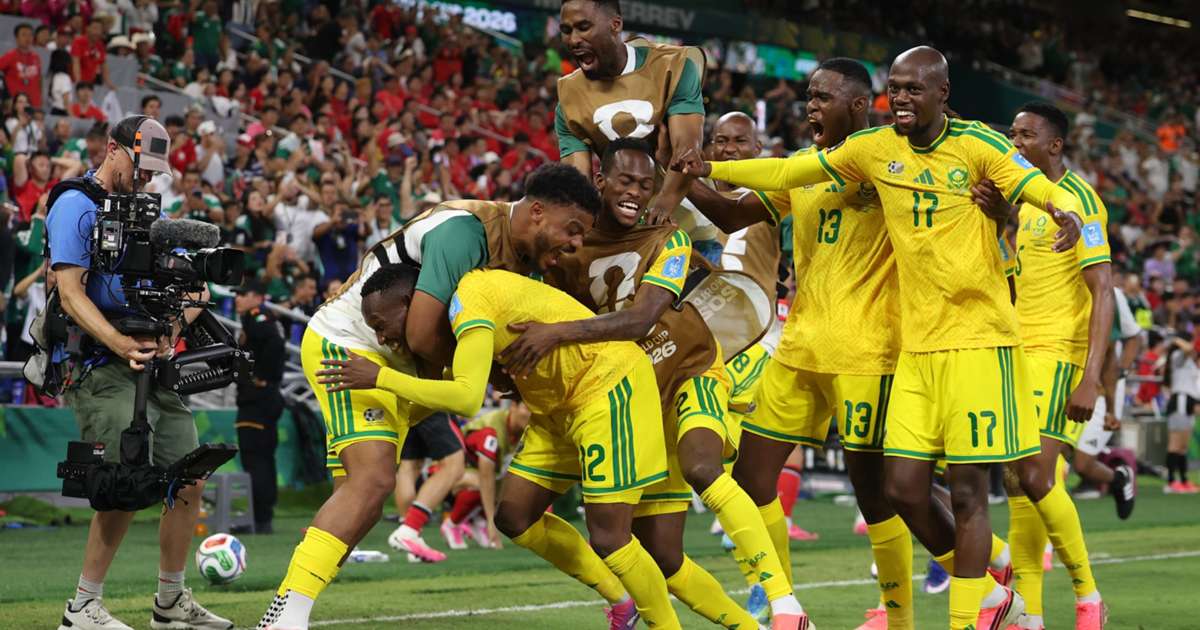
The atmosphere across South Africa was electric, even with the time difference. In Soweto, fans gathered around big screens, their vuvuzelas silent only during the tensest moments of the South Africa vs South Korea game. When Maseko scored, the sound was deafening. It wasn’t just noise; it was a release of years of frustration and “almost” moments. People were dancing in the streets of Melville and Sandton, united by a team that finally delivered on its promise.
On social media, the sentiment was one of overwhelming pride. Local fans spoke about the “spirit of 2010” finally being fulfilled. They didn’t just host the world back then; they are now conquering it. This victory has a human face—the face of a father teaching his son about Benni McCarthy while watching Maseko become the new hero.
In the stadium in Monterrey, the small but vocal contingent of South African supporters out-sang the Korean fans. Their songs echoed through the rafters, providing a rhythmic backdrop to the tactical battle on the pitch. Even the Mexican locals began cheering for the underdog South Africans, drawn in by their resilience and the infectious joy of their celebrations. This was a night where football felt like a universal language of hope.
Frequently Asked Questions about South Africa vs South Korea
What was the final score of the South Africa vs South Korea 2026 World Cup match?
South Africa defeated South Korea 1-0 in an intensely contested final Group A fixture to secure their place in the knockout rounds.
Who scored the winning goal for Bafana Bafana?
Thapelo Maseko scored the historic match-winning goal in the 63rd minute of the second half to break the deadlock.
Did South Africa qualify for the Round of 32?
Yes, South Africa finished second in Group A with 4 points, officially qualifying for the World Cup knockout stages for the first time in their history.
Who will South Africa face in the next round of the World Cup?
Bafana Bafana will travel to Los Angeles to face Canada at SoFi Stadium in a highly anticipated Round of 32 match on June 28, 2026.