









- The Statistical Anomaly: Sir Don Bradman finished his Test career with a batting average of 99.94, a figure that is statistically 9 standard deviations above the mean of all other top-tier cricketers.
- Historical Dominance: During the 1948 “Invincibles” tour, Bradman led Australia to an unbeaten 34-match streak in England, a feat of endurance and skill that remains unmatched in the 2026 sporting landscape.
- Technological Resilience: Despite playing on uncovered pitches with heavy wooden bats and minimal protective gear, Bradman’s scoring rate and consistency outperformed every modern legend using advanced composite equipment.
Sir Don Bradman is widely considered the greatest sportsman to ever live, possessing a statistical lead over his peers that defies the standard laws of athletic progression. In the world of international cricket, where a career average of 50 is the benchmark for greatness, the “Boy from Bowral” stands nearly twice as high as the next best player.
ALSO READ: David Miller net worth 2026: Salary, IPL earnings, and cricket career
As we analyze the state of the game in 2026, his record of 99.94 remains the undisputed “Everest” of sports, a number so iconic it has become the standard by which all other dominance is measured.
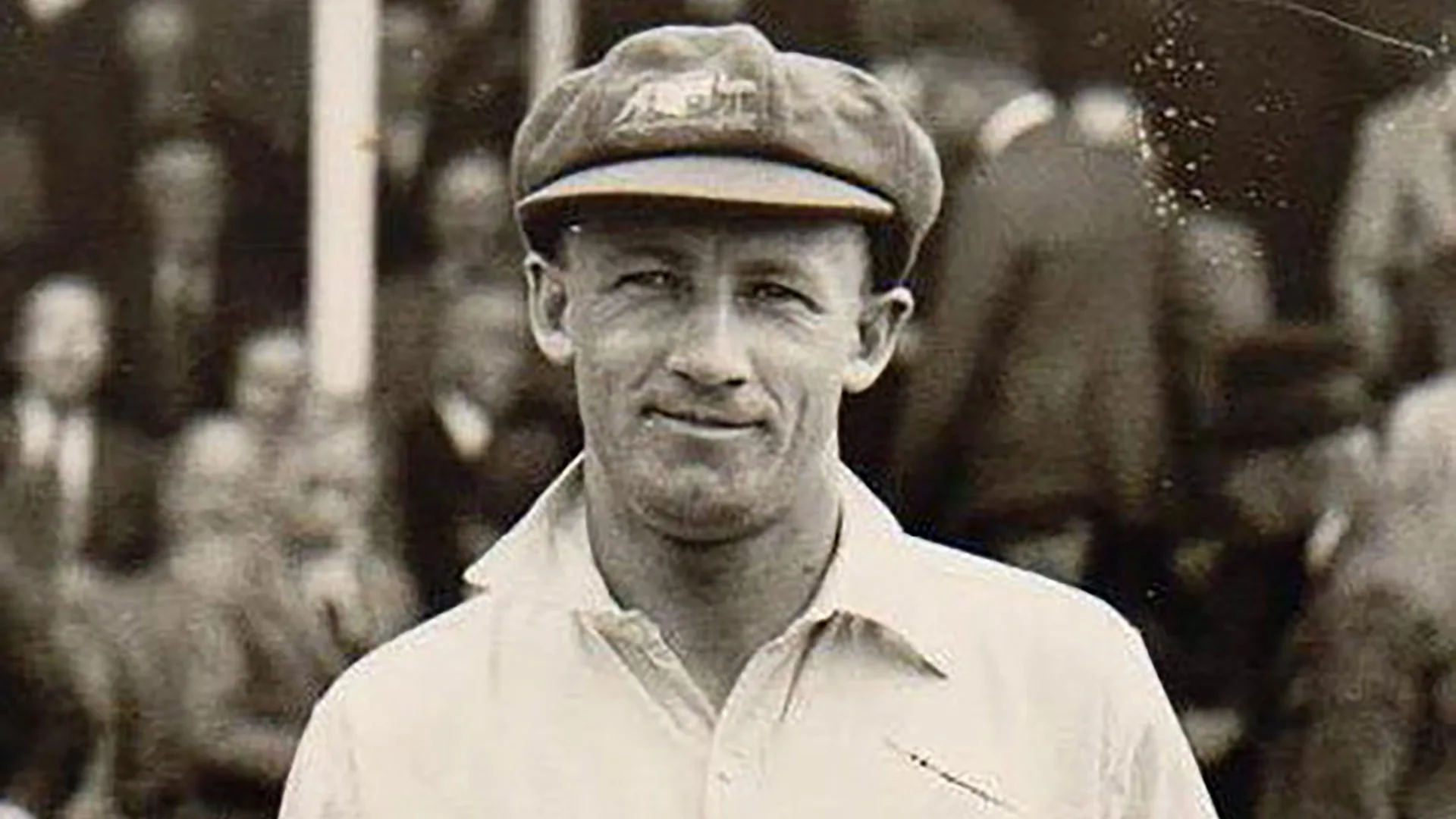
To understand the sheer magnitude of Sir Don Bradman, one must look past the simple tally of runs and into the mechanics of his era. He played in an age of “Bodyline” tactics, uncovered pitches that could turn into “sticky dogs” after rain, and a complete lack of the modern helmets that today’s players rely on.
Yet, his ability to manipulate the field and maintain focus for days at a time created a gap between him and his contemporaries that has only widened as the centuries pass.
ALSO READ: Virat Kohli wife and family: Meet Anushka Sharma, their children, and parents
This SportsLeo deep-dive explores the man, the myth, and the mathematics behind the most significant record in sports history. From the backyard water tank in New South Wales to the hallowed turf of Lord’s, we examine why no human being in the next 100 years is likely to touch the shadow of the Don.
Table of Contents
What makes the 99.94 average the most unbreakable record in sports?
The number 99.94 is more than just a statistic; it is a symbol of perfection narrowly missed. Sir Don Bradman needed only four runs in his final Test innings at The Oval in 1948 to finish with a career average of exactly 100. Instead, he was bowled for a second-ball duck by Eric Hollies, an ending so poetic it humanized a man who had spent two decades batting like a machine.
In modern cricket, the highest career averages tend to hover between 55 and 62. Players like Steve Smith, Kane Williamson, and Joe Root have occasionally spiked into the high 60s, but the grueling nature of the 2026 international schedule invariably pulls those numbers back toward the mean. To maintain an average of 99.94 over 52 Test matches requires a level of consistency that ignores the “law of averages” entirely.
ALSO READ: Tiger Woods Girlfriend: Inside His Private Life and Relationship History
Bradman’s dominance was built on a unique “rotary” batting style, developed by hitting a golf ball with a cricket stump against a curved water tank. This unorthodox upbringing gave him a preternatural sense of ball tracking and a wristy, ground-based stroke play that eliminated the risk of being caught. While modern players often look to the air, Sir Don Bradman kept the ball on the turf, methodically dismantling bowling attacks with surgical precision.
How does Sir Don Bradman compare to modern legends using 2026 analytics?
If we apply 2026 Advanced Performance Analytics to Bradman’s career, the results are even more staggering. Using metrics like “Control Percentage” (the frequency with which a batter plays the ball exactly where intended), sports historians estimate Bradman operated at a 92% control rate. For comparison, the best modern players typically range between 78% and 84% in Test conditions.
Furthermore, his “Runs Per Innings” (RPI) in high-pressure situations—specifically the fourth innings of a match or when his team was trailing—exceeded his career average. This suggests that the greater the challenge, the more focused the Don became. In an era before sports psychologists and data analysts, Bradman was his own supercomputer, adjusting his footwork based on the subtle changes in the pitch’s moisture levels.
| Metric | Sir Don Bradman | Modern Avg (Top 10) |
|---|---|---|
| Test Batting Average | 99.94 | 53.40 |
| Centuries per Innings | 36.25% | 14.50% |
| Double Centuries | 12 | 3.2 (Career Avg) |
| Strike Rate (Estimated) | 60-65 | 52-58 |
According to data from StatsPerform, Bradman’s efficiency was such that he scored his runs approximately 20% faster than his contemporaries while being dismissed half as often. This combination of speed and safety is the “Holy Grail” of batting that modern coaching seeks to replicate through T20 influence, yet Bradman achieved it in the most defensive era of the sport.
Why is Bradman’s impact on Kenyan cricket culture still felt today?
The “On-the-Ground Perspective” in Nairobi today reveals a surprising truth: Sir Don Bradman is a household name among the cricket-mad youth of the Nairobi Gymkhana. Despite the distance and the decades, the story of the “Boy from Bowral” hitting a ball against a water tank resonates deeply with Kenyan aspiring athletes who often start their journeys with improvised equipment in local estates.
Kenyan fans, who still talk about the legendary 2003 World Cup semi-final run with misty-eyed reverence, see Bradman as the ultimate underdog who conquered the “Mother Country.” In local academies, coaches use Bradman’s life story to teach discipline.
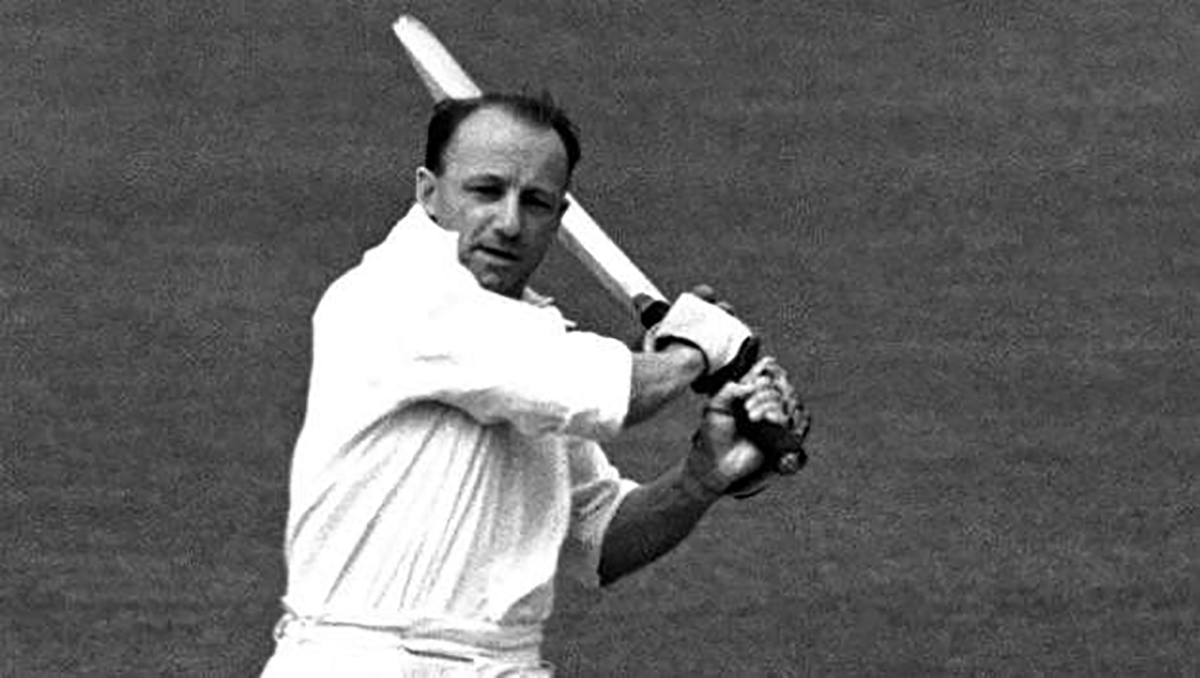
They emphasize that he didn’t have the finest coaching or the best nets; he had a stump, a golf ball, and an obsession with perfection. This “Bradmanesque” work ethic is what Kenyan fans believe is required to return the national team to the 2026 global elite.
On social media, Kenyan cricket groups often use the hashtag #BradmanSpirit when a local player shows grit in a difficult run chase. There is a spiritual connection between the hard, dry pitches of Nairobi and the sun-baked ovals of Australia.
For the Kenyan fan, Sir Don Bradman represents the idea that sport is a meritocracy—that if you are good enough, the numbers will eventually force the world to take notice. His legacy acts as a bridge between the colonial past of the game and its multi-polar, global future.
How does his “Sigma Rating” compare to Michael Jordan and Tiger Woods?
When sports scientists compare athletes across different disciplines, they use a “Z-score” or “Sigma Rating” to determine how far an individual is from the average performance of their peers. This is where Sir Don Bradman truly separates himself from every other athlete in recorded history. While legends like Michael Jordan and Wayne Gretzky are roughly 3 to 4 standard deviations above the mean, Bradman is nearly 9 sigmas removed.
To put this into context for an NBA fan, Michael Jordan would have needed to average approximately 43 points per game over his entire career to match Bradman’s relative dominance. In baseball, Ty Cobb or Ted Williams would have needed to hit nearly .450 for their entire careers. Bradman didn’t just lead the pack; he existed in a different statistical universe.
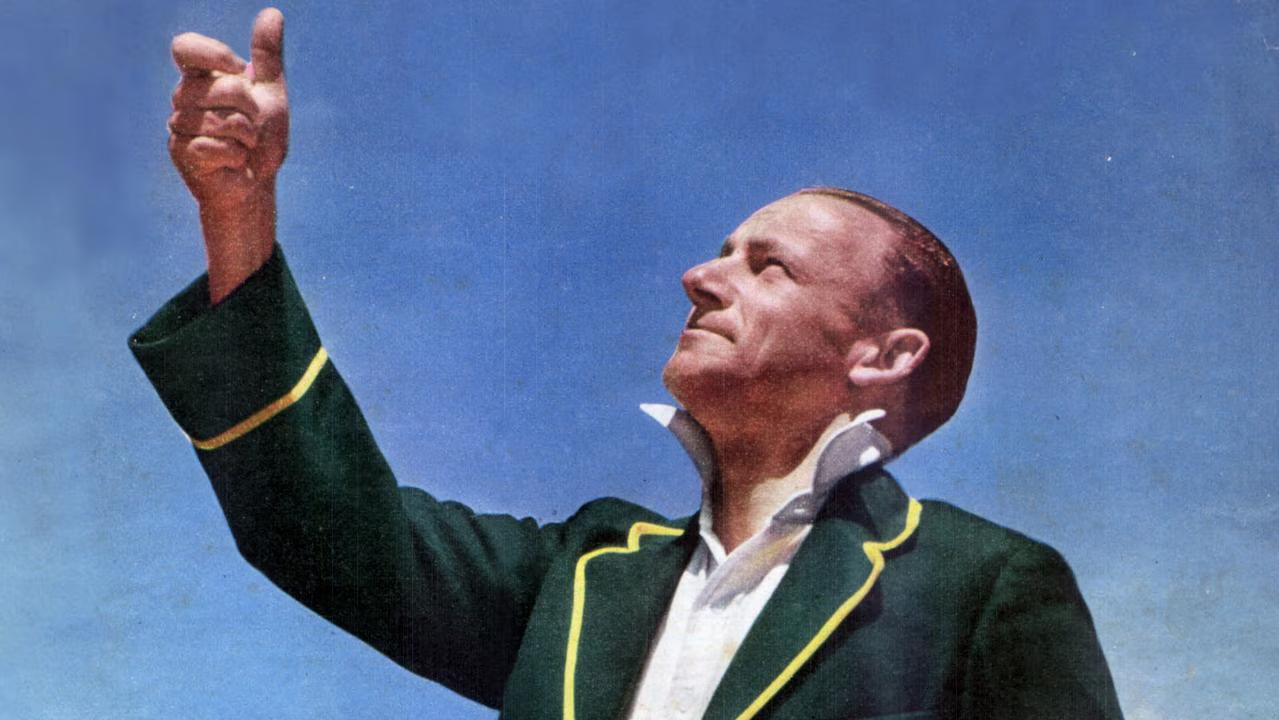
This is why comparisons to Tiger Woods or Pelé often fall short. Those athletes had rivals who could, on their best days, match or even exceed them. Bradman’s rivals—greats like Wally Hammond or George Headley—were nearly 40 runs per innings behind him. As we analyze this in 2026, it is clear that Bradman is the only athlete to have “solved” his sport, finding a loophole in the game’s mechanics that allowed for near-infinite run-scoring.
What were the financial and sponsorship impacts of his 1948 “Invincibles” tour?
The 1948 tour of England, where Sir Don Bradman captained the “Invincibles,” was the first major international sporting event after World War II. It was a massive financial undertaking that practically saved the coffers of the Australian Cricket Board. Research shows that match attendances broke records at every venue, with the Fourth Test at Headingley attracting over 158,000 people over five days.
While the concept of “sponsorship” was in its infancy, the “Bradman Brand” was already a global powerhouse. He was offered a lucrative contract by a Fleet Street newspaper to cover the tour as a journalist, which he initially considered as it paid more than his playing fee of £600. Ultimately, the Australian government and cricket authorities recognized his value as a “cultural ambassador,” and his presence helped generate millions in revenue for a post-war Britain desperate for entertainment.
In today’s currency, the additional gate receipts generated solely by fans wanting to see Sir Don Bradman one last time would equate to tens of millions of dollars. He was the first truly “un-missable” athlete, a man whose dismissal could lead to thousands of people leaving the stadium immediately. This “Spillover Effect” on match-day revenue is something The International Cricket Council (ICC) still studies when assessing the value of modern superstars like Virat Kohli.
How has the evolution of bat technology highlighted his genius?
One of the missed sub-topics in many historical analyses is the role of technical evolution. In 2026, cricket bats are “designed” using wind tunnels and high-density carbon-fiber-pressed willow. They have massive “sweet spots” that allow even a mistimed shot to fly over the boundary. Sir Don Bradman, however, played with a bat that would be considered a “toothpick” by today’s standards.
His bats were made of narrow, heavy willow with small sweet spots located low on the blade. To score at the rate he did—averaging a century every three innings—meant he had to hit the ball with the absolute center of the bat nearly every single time. Modern biomechanical studies suggest that his hand-eye coordination must have been at the absolute limit of human potential to maintain such accuracy over 20 years.
Furthermore, Bradman’s “grip” was uniquely designed to keep the ball down. By keeping his hands close together and his wrists flexible, he could “roll” the bat over the ball at the point of contact. This prevented the ball from lifting, making him virtually immune to the “caught at mid-on” dismissals that plague modern aggressive batters. His technical evolution wasn’t about the tool; it was about the mastery of the human body in relation to the ball.
What was the “Bodyline” series, and why did it fail to stop him?
In 1932-33, the England team under Douglas Jardine devised a strategy so controversial it nearly ended diplomatic relations between the two nations. Known as “Bodyline,” it involved fast bowlers like Harold Larwood aimed directly at the batter’s torso and head, with a cluster of fielders on the leg side. It was specifically engineered to stop Sir Don Bradman from scoring.
While “Bodyline” did lower his average to “only” 56 for that series, it ultimately failed because Bradman adapted. He began using unorthodox tennis-style shots to hit the short ball into the gaps, refusing to be intimidated. His resilience during that summer turned him into a national hero in Australia, symbolizing a young nation standing up to the “Mother Country.”
The legacy of “Bodyline” led to significant rule changes in cricket, limiting the number of fielders behind square on the leg side. Even today, the “Bradman Rule” (the spirit of fair play vs. tactical aggression) is a major talking point in the SportsLeo community. Bradman didn’t just beat the bowlers; he beat the system itself.
SportsLeo Forecast: The Next 12 Months
As we move through 2026, the “Bradman-Ratio” will become a staple of advanced scouting. With the proliferation of T20 leagues, the value of “pure” Test batting is rising. We expect to see a new wave of “Technical Traditionalists” appearing in the Australian and Indian domestic circuits, attempting to emulate the ground-based, high-control percentage style of the Don. While no one will hit 99.94, the chase for a 70.00 average in the World Test Championship will be the primary narrative of the coming year.
Frequently Asked Questions
How many runs did Sir Don Bradman score in his last innings?
He scored 0 (a duck). He was bowled second ball by Eric Hollies at The Oval in 1948. If he had scored just 4 runs, his career average would have been 100.
What was the “water tank” training method?
As a child in Bowral, Bradman practiced by hitting a golf ball with a cricket stump against a curved corrugated iron water tank. The unpredictable rebound of the ball sharpened his reflexes and hand-eye coordination.
Did Sir Don Bradman ever play against Kenya?
No, Bradman never played against the Kenyan national team. However, his influence on the game spread through the Commonwealth, and he is a revered figure in Kenyan cricket history for his role in defining batting excellence.
Why is his average exactly 99.94?
It is a mathematical result of scoring 6,996 runs and being dismissed 70 times (6,996 / 70 = 99.9428…). In cricket, your average is total runs divided by the number of times you were out.
Who is the closest modern player to Bradman’s record?
As of early 2026, no player with a significant career (over 20 matches) has an average above 63. Steve Smith and Harry Brook have reached high peaks, but maintaining those numbers over a long career remains the ultimate challenge.