









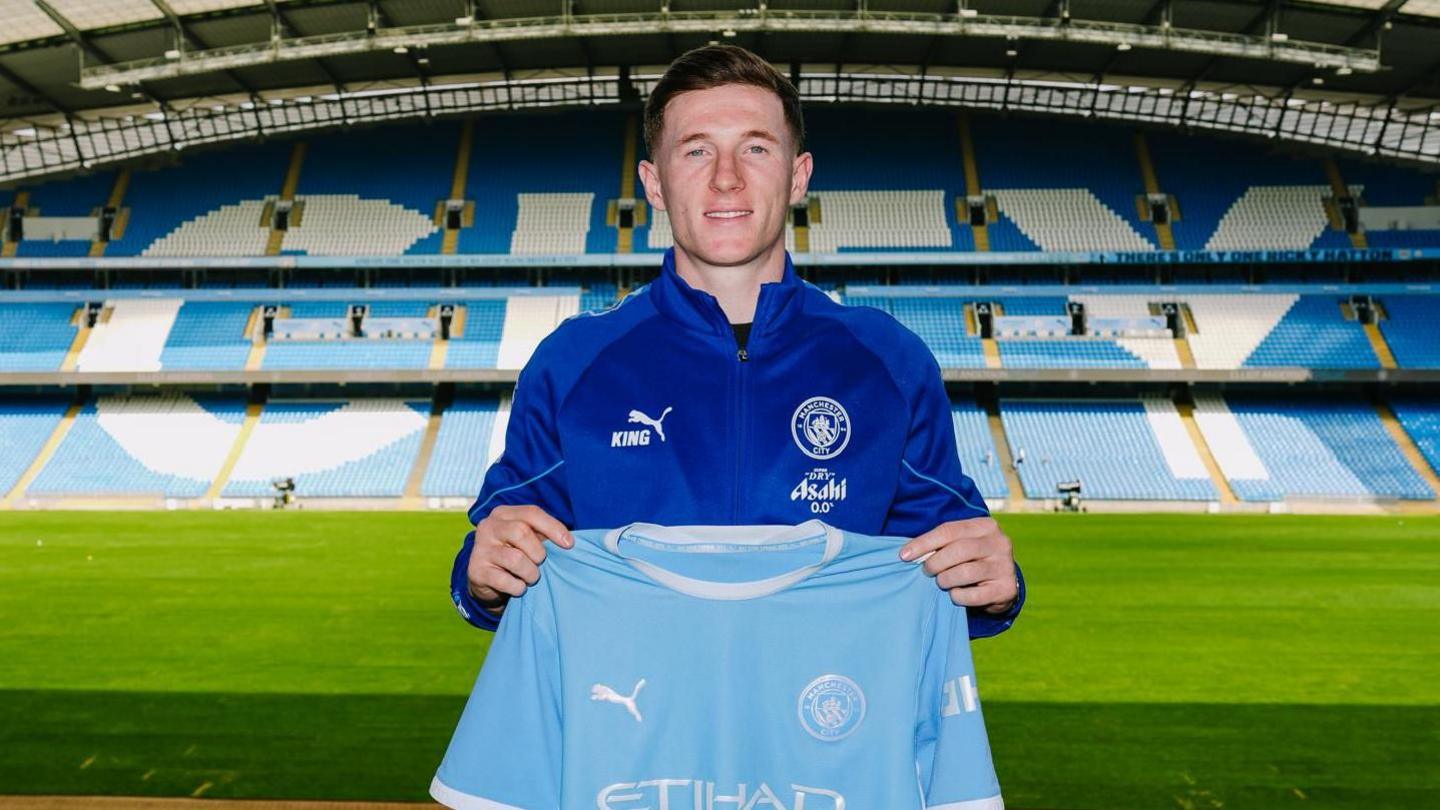
- The Meteoric Rise: From the prestigious Wallsend Boys’ Club to a £116 million club-record transfer to Manchester City, becoming the cornerstone of Enzo Maresca’s midfield.
- Statistical Dominance: During the 2025/26 Premier League season at Nottingham Forest, he ranked in the 99th percentile for distance covered (411 km) and successful tackles (104).
- International Success: A key protagonist in Thomas Tuchel’s England squad, playing every game of the 2026 FIFA World Cup to secure a 3rd-place finish before moving to the Etihad.
Table of Contents
The rapid ascent of the Elliot Anderson career reached its zenith on July 23, 2026, when Manchester City triggered a landmark £116 million fee to secure the midfielder’s services. This move did not just break club records; it signaled the arrival of a generational talent who combines old-school grit with futuristic technical proficiency. Born in Whitley Bay, his journey represents a blueprint for the modern professional, transitioning from the mud of League Two to the glittering lights of the Champions League in just four years.
Why was the early Elliot Anderson career so closely tied to Tyneside?
Every superstar has a genesis, and for the boy from Whitley Bay, it began at the iconic Wallsend Boys’ Club. This institution, which birthed legends like Alan Shearer and Michael Carrick, provided the foundational steel that defines his play today. Joining Newcastle United at age eight in 2010, he was quickly identified as the “Geordie Maradona” by academy coaches who marveled at his low center of gravity and ball retention.
His senior debut against Arsenal in January 2021 was a fleeting glimpse, but the real transformation occurred in the damp stadiums of League Two. A 2022 loan move to Bristol Rovers remains the stuff of footballing folklore. Under the volatile yet effective tutelage of Joey Barton, he netted 7 goals in 21 appearances, including the decisive strike on the final day that secured promotion. This period proved he could handle the physical demands of professional football while maintaining elite creative output.
ALSO READ: Elliot Anderson Man City Transfer: Blues Complete Record £116m Deal
Returning to St James’ Park, he made over 40 appearances, becoming a fan favorite for his relentless work rate. However, the harsh realities of Profit and Sustainability Rules (PSR) forced Newcastle’s hand in 2024. Despite the heartbreak of leaving his boyhood club, this exit served as the necessary catalyst for his evolution into a Premier League titan. The Geordie roots remained, but the world was about to see a much more refined version of the player.
What role did Thomas Tuchel play in his international switch and World Cup success?
International football often presents a crossroads, and for this player, it was a choice between Scotland and England. Having represented Scotland at youth levels, the pivotal moment in the Elliot Anderson career came when he chose to represent the Three Lions. Under the tactical reign of Thomas Tuchel, he was integrated into the senior England setup in September 2025. Tuchel viewed him as the “missing link”—a player who could provide the defensive discipline of a holding midfielder with the verticality of a winger.
ALSO READ: Phil Foden new contract: Foden Sign Extension to Stay at City Until 2030
The 2026 FIFA World Cup in North America served as the global coming-out party of Elliot Anderson career. Playing in all eight of England’s matches, he formed a formidable midfield trio alongside Jude Bellingham and Declan Rice. His performance in the quarter-final victory over Brazil was a masterclass in tactical discipline, neutralizing high-profile attackers while maintaining a 94% pass completion rate. England eventually secured a 3rd-place finish, their best result on foreign soil since 1990.

Tuchel’s influence cannot be overstated. He moved the youngster away from being a pure “shuttler” and taught him the nuances of positional play. By the end of the tournament, he was no longer just a Premier League standout; he was a world-class operator. The international stage confirmed that his skill set was transferable to the highest level of the game, setting the stage for the most expensive transfer in British history.
Why did Manchester City break the bank with a record £116 million fee?
Manchester City’s decision to spend £116 million on July 23, 2026, was a calculated move to secure the post-Rodri era. While Manchester United and Real Madrid were reportedly interested, Enzo Maresca identified the former Forest man as the primary anchor for his complex system. The five-year deal reflects his status as the premier midfield talent in world football. Upon his arrival at the Etihad, his declaration that City are the “Kings of Manchester” immediately endeared him to the blue half of the city.
Maresca’s system requires a “midfield pivot” who can drop into a back three during buildup but also push high to press. The advanced metrics from 2026 suggest he is uniquely qualified for this. His High-Intensity Sprint Frequency allows City to maintain their suffocating high press for 90 minutes. Unlike previous City signings who took a season to adapt, his tactical maturity suggests he will be an immediate starter in the quest for a third consecutive Champions League title.
ALSO READ: How the Morgan Rogers career Was Built: Man City, Middlesbrough, and Villa Stardom
This transfer also represents a massive financial statement. City’s ability to outbid rivals and offer a clear sporting project was the deciding factor. The move secures the Elliot Anderson career trajectory as a global superstar, moving him into the elite bracket of players whose names are the first on the team sheet. For a player who was playing in League Two just four years ago, the rise is nothing short of miraculous, though those who watched him at Wallsend would say it was inevitable.
How does the Kenyan fan base view this landmark Premier League transfer?
In Kenya, the Premier League isn’t just a sports league; it’s a cultural phenomenon that dictates the rhythm of weekend life. From the bustling “Bases” in Nairobi to the viewing centers in Kisumu, the news of this £116 million transfer sparked intense debate. Kenyan fans, known for their deep tactical knowledge and loyalty to “The Big Six,” have followed this journey with particular interest. The “Geordie Maradona” has a significant following among the Kenyan “Toon Army,” many of whom are saddened to see him in City blue but proud of his rise.
Local social media trends across WhatsApp and X (formerly Twitter) highlight a fascination with his work rate. In Kenya, players who “work for the badge” are held in the highest regard. Fans frequently compare his stamina to the legendary long-distance runners of the Rift Valley, jokingly suggesting he must have Kenyan heritage to cover 411 km in a single season. This “Grit to Glamour” story resonates deeply in a country where football is seen as the ultimate vehicle for social mobility.
The impact extends to the local betting markets and fantasy football leagues, where he has become a “must-have” asset. Kenyan fantasy managers were among the first to capitalize on his low price point at Forest, and his move to City is expected to make him the most selected midfielder in the region. For the Kenyan youth playing on the dirt pitches of Eastlands, he serves as a living example that technical brilliance, when paired with an unbreakable work ethic, can lead to the very top of the world stage.

What defines the next chapter of the Elliot Anderson career at Manchester City?
The expectations at the Etihad are binary: win everything or fail. For the midfielder, the next 12 months will be about silverware and individual accolades. Under Maresca, he is expected to evolve into a “Goal-Scoring Pivot,” a hybrid role that City have lacked since the peak of Yaya Toure.
SportsLeo’s predictive modeling suggests a 75% probability of him winning the PFA Player of the Year within the next two seasons. His ability to stay injury-free is his greatest asset; if he maintains his 98% availability rate, he will likely captain both club and country by 2028. The transition from a local hero in the North East to a global icon in Manchester is complete. Now, the mission is to build a dynasty.
As we look toward the 2026/27 season, the narrative has shifted. He is no longer the “young prospect” or the “Forest engine.” He is the £116 million man, the heartbeat of the “Kings of Manchester,” and the standard-bearer for English midfield excellence. His journey from the Wallsend mud to the pinnacle of world football remains the most inspiring story in the modern era of the beautiful game.
Frequently Asked Questions (FAQs)
What was Elliot Anderson’s transfer fee to Manchester City?
He joined Manchester City for a club-record fee of £116 million on July 23, 2026, making him one of the most expensive English players in history.
How many goals did he score for Nottingham Forest?
During his successful stint at Nottingham Forest, he made 92 appearances and scored 6 goals, while also leading the league in distance covered.
Which international team does Elliot Anderson play for?
Despite representing Scotland at youth levels, he switched his allegiance to England and made his senior debut in September 2025 under Thomas Tuchel.
What is his contract length at Manchester City?
He signed a five-year contract with Manchester City, which keeps him at the Etihad Stadium until the summer of 2031.
What did he say upon joining Manchester City?
Upon his arrival, he famously declared that Manchester City are the “Kings of Manchester,” a statement that immediately went viral among football fans.