






- Some of the most inspirational sports tales are those of NFL players who grew up in poverty, triumphing over difficulties most of us cannot imagine
- Their stories are not just a reflection of personal determination, but also a glimpse into structural challenges confronting so many in poor communities
- A particularly compelling example among poor NFL players is Patrick Willis, former linebacker for the San Francisco 49ers
Some of the most inspirational sports tales are those of NFL players who grew up poor, triumphing over difficulties most of us cannot imagine, to reach pro football‘s top echelon.
These players did not have amenities, good safety nets, or guaranteed passports to success — what they had was resiliency, toughness, and very frequently a burning desire to better their station in life. From homelessness to dysfunctional families, from burger flipping to dealing with familial tragedies, these are their stories of how far they’ve come from and what they’ve left behind.
In this article, we examine the lives of some NFL stars who grew up poor, how their upbringing affected them, what they went on to achieve, and how they give back now. Their stories are not just a reflection of personal determination, but also a glimpse into structural challenges confronting so many in poor communities.
Early Lives of NFL Players Who Grew Up Poor
1. Patrick Willis — Cotton Fields and Trailer Parks
A particularly compelling example among poor NFL players is Patrick Willis, former linebacker for the San Francisco 49ers. He grew up in Bruceton, Tennessee, and was working full-time in cotton fields by the time he was ten years old and living in a trailer park.

Willis took care of his younger siblings when his father became increasingly abusive and his home life deteriorated. His childhood was marked by poverty not just in financial terms but also instability.
“We grew up with pretty much nothing, but the things I did with nothing, they taught me who I am.” He said, according to Wikipedia.
Willis had to leave home while in high school to make his way to a safer area to live and be able to keep playing football.
2. Jaleel McLaughlin — Homelessness and Loss
Jaleel McLaughlin is another good example of NFL players who grew up poor and still made it. Born in Marshville, North Carolina, he and his mother and siblings were homeless—living in cars, hotels and motels at various times, bouncing from relatives’ houses.
In middle school, when his mother lost her job, everything unraveled. He lost his grandmother who had been a source of stability for him, then his cousin, a role model, died. McLaughlin has spoken openly about the pain of not having a “home” to claim as stable.

Yet he used sports—football, track, basketball—as a way out, a way to focus, to have a structure.
3. Najee Harris — Shelters and Single Motherhood
Pittsburgh Steelers running back Najee Harris is frequently mentioned among NFL players who grew up poor. He was raised by a single mother in the San Francisco Bay Area, in several lower-income neighborhoods.
His family was, at one point, homeless and living in a shelter while he was attending middle school before moving to Antioch, California. Despite those challenges, Harris excelled at football in high school, getting heavy numbers, and ultimately a first-round pick.
4. Michael Oher — Foster Care, Homelessness, and a Football Path
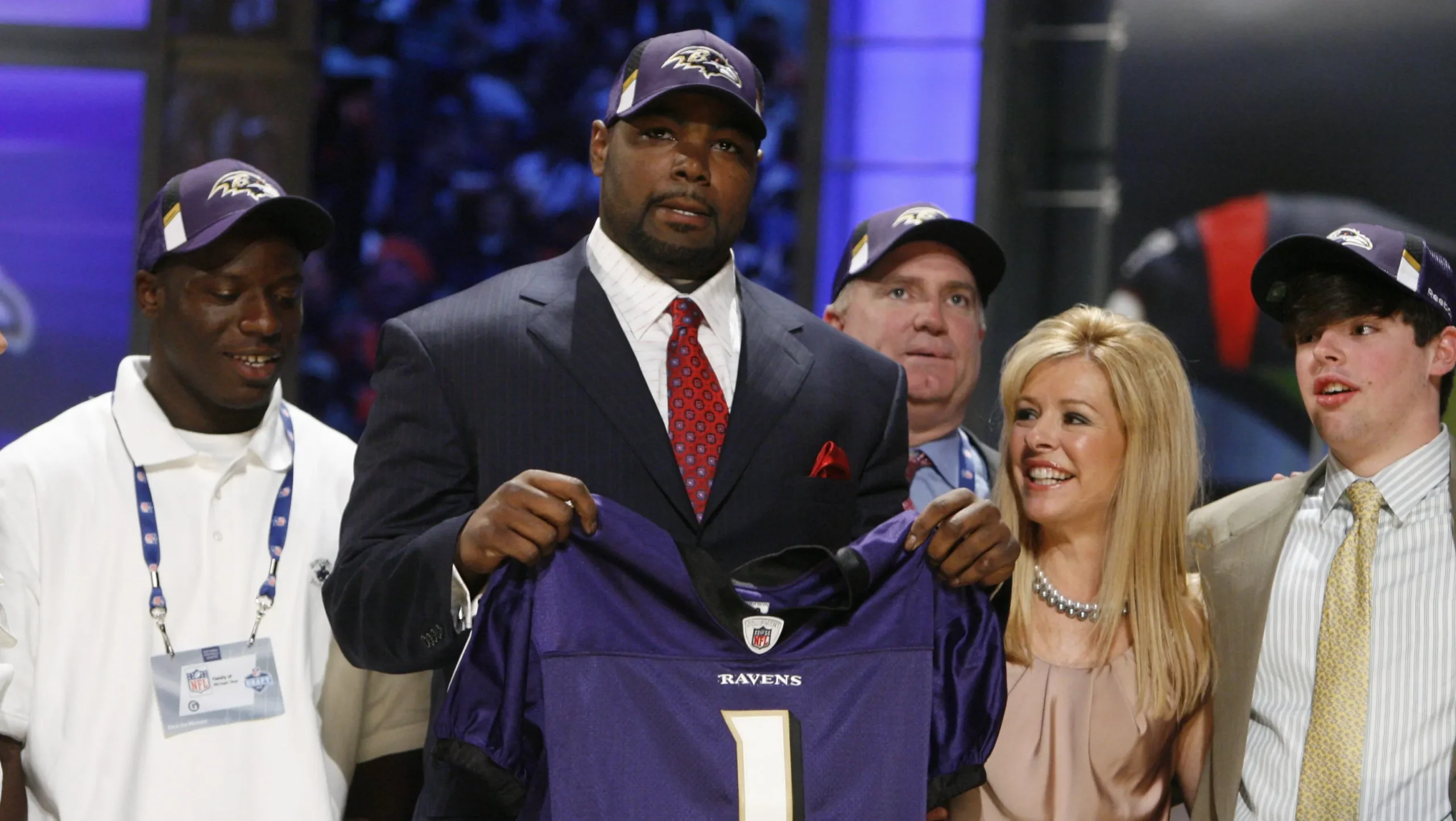
Michael Oher’s story is perhaps one of the most popular of NFL players who grew up in poverty. Having grown up in poverty in the neighborhood, with an addicted mother and an absent father, young Oher did a stint in foster care and was shuffled from school to school.
He began life in the foster care system at the age of seven. By the time he was sixteen, he was settled with a good family—The Tuohy family—who helped him gain the scholarship and foundation he needed to excel at the University of Mississippi and eventually in the NFL.
His life became the inspiration for the book The Blind Side and its film adaptation. “I didn’t know if I was going to see the next day, let alone play college ball,” he once said.
5. Terrence Cody — Seven Siblings, Two Jobs, and a Dream
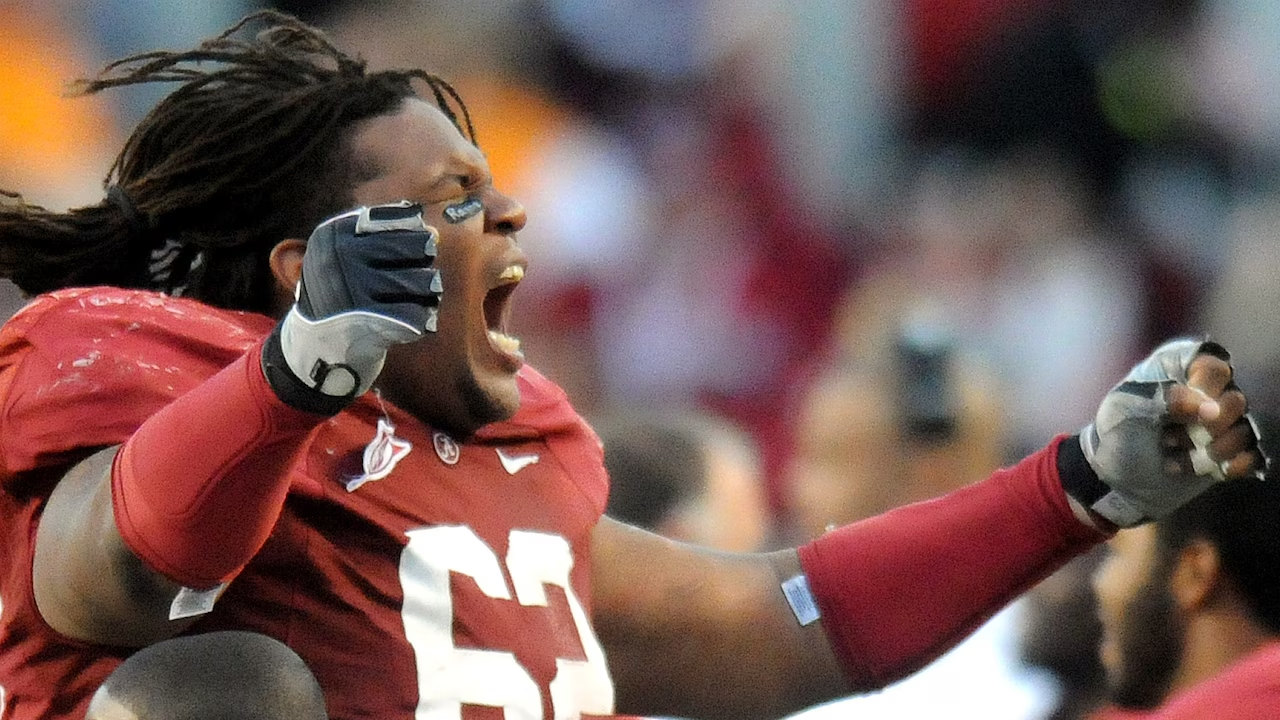
Former defensive tackle Terrence Cody also came from a tough past. Among the NFL players who grew up poor, Cody’s youth was spent with his mother working two jobs—bus driver and traveling nurse—and his father, who died when he was young. Cody shared what little there was with several siblings.
Cody moved on to the University of Alabama, where his personality and size ensured that he became a fan favorite. That environment provided him with discipline, sacrifice, and playing through adversity.
How Poverty Affected Mindset, Motivation, and Performance
For poor NFL players, poverty often instills those traits that later become assets—grit, humility, work ethic, resourcefulness, and a sharp sense of risk and opportunity. These are not traits acquired in wealthy neighborhoods but forged in adversity.
Work Ethic Born of Necessity
A majority of these players recount early responsibilities—working odd jobs, helping with the care of siblings, doing chores that many of their peers avoided.
Patrick Willis picking cotton, Jaleel McLaughlin overseeing housing stability, Najee Harris being homeless—these aren’t trivial background facts; these were daily stresses that shaped discipline.
Resilience: Bouncing Back from Setbacks
Poverty generally meant setbacks—fewer resources, instability, even hunger at times. Michael Oher had to adapt to multiple homes, schools.
Jaleel McLaughlin lost loved ones early. Willis had to navigate family drama. These athletes had to become resilient, to manage loss, to keep pushing when the path ahead seemed blocked off. That mindset translates well to the field—injuries, competition, setbacks—they expect them and often lean into them rather than being destroyed by them.
Gratitude and Perspective
A common theme amongst NFL players who grew up poor is gratitude. When they do find success, they don’t tend to take the small things for granted.
Josh Allen, not exactly “poor,” has often credited watching his parents get up early to perform farm work as giving him an impenetrable work ethic. Jaleel McLaughlin talked about how having “one steady house” was a life-changer.
That gratitude often pushes them to pay it forward—through volunteer work, charitable foundations, mentoring.
Comparing Journeys — Side by Side
Here is a head-to-head comparison of how two of these players’ journeys are different and what their paths had in common:
| Player A | Player B | Early Hardships | Turning Point | NFL Achievement |
| Patrick Willis | Jaleel McLaughlin | Willis: Picking cotton at age ten, trailer park, family breakdown. McLaughlin: Homelessness, losing grandma & cousin, moving frequently. |
Willis: Excelled in high school football and secured college scholarship. McLaughlin: Outstanding high school performance + track & football leading to college and NFL opportunities. |
Willis: Multiple Pro Bowls, Hall of Fame induction. McLaughlin: Rising NFL running back, respect for overcoming hardships. |
| Najee Harris | Michael Oher | Harris: Single mother, temporary homelessness. Oher: Foster care, unstable home, family instability. |
Harris: College football at Alabama, first-round draft pick. Oher: Opportunity from Tuohy family, scholarship, standout football performance. |
Harris: NFL starter, consistent production. Oher: Successful NFL career, later charitable work. |
Transition to Success: College, Draft, and NFL
After their challenging early years, how did these players who were poor make it to the next level? The journey is almost always harder.
Securing Scholarships and Exposure
For most, college scholarships provided stability. Patrick Willis’s high school performance earned him scholarship offers that allowed him to leave behind cotton fields and trailer parks.
Michael Oher was highly recruited and well cared for when he lived with the Tuohy family. Najee Harris’s high school performance put him in the national spotlight. Without those opportunities, most skilled players never get an opportunity to showcase their talent.

Draft Day and the Pro Leap
Making it to the NFL draft is a watershed moment. For those who grew up poor, it isn’t just finishing high school or college—it’s a chance to ensure their family never again endures the same struggles.
Javon Kinlaw, for example, did not have a stable home during his childhood, and when he was drafted, his rookie contract would pay him more than $15 million, which is enough so that he and his family never have to live again with the same struggles.
Sustainment: Staying in the League
Once in the NFL, staying so is almost as hard as getting there. Injury, competition, contracts, off-the-field stressors—these are daunting.
Those players who grew up poor have a mindset of “nothing is guaranteed,” and this keeps them humble and hungry. They work harder, stay distraction-free, and tend to use their platform to help others.
ALSO READ
- The greatest NFL players of all time
- Roger Staubach, the NFL legend worth $600 million
Giving Back: Using Their Platforms
Many of the NFL players who were previously poor do not forget where they came from, and try to give back in material ways. Javon Kinlaw has spoken of lofty aspirations for homeless shelters, using his personal history of being homeless.
Najee Harris is involved in both family and community endeavors; his background gives him credibility when he speaks for causes involving housing, youth programs, or hunger.
Michael Oher, and his family through the Tuohy Foundation, has helped foster care, adoption access programs, and scholarships for underprivileged youths.
Conclusion
The stories of NFL players who grew up poor are more than rags-to-riches tales; they are lessons in resilience, determination, and the power of opportunity.
Players like Patrick Willis, Jaleel McLaughlin, Najee Harris, Michael Oher, Terrence Cody, and Javon Kinlaw remind us of the cost of poverty, but the potential when people won’t let their beginnings define them. Their poverty-stricken childhoods built character, instructed them in values, and generally distinguished them in a league where talent is a dime a dozen but drive is not.
While their on-field successes are legendary — touchdowns, sacks, tackles, Pro Bowls — their off-field successes are just as remarkable: reminding us that environment is not destiny, that support (from family, mentors, community) matters, and that giving back can be a healing path.
In telling the stories of NFL players who grew up poor, we honor not just what they became, but where they’ve been. And perhaps most importantly, we discover that the road out of poverty is long and hard — but for those willing to climb, the view is breathtaking.
Discover more from Sportsleo News
Subscribe to get the latest posts sent to your email.