





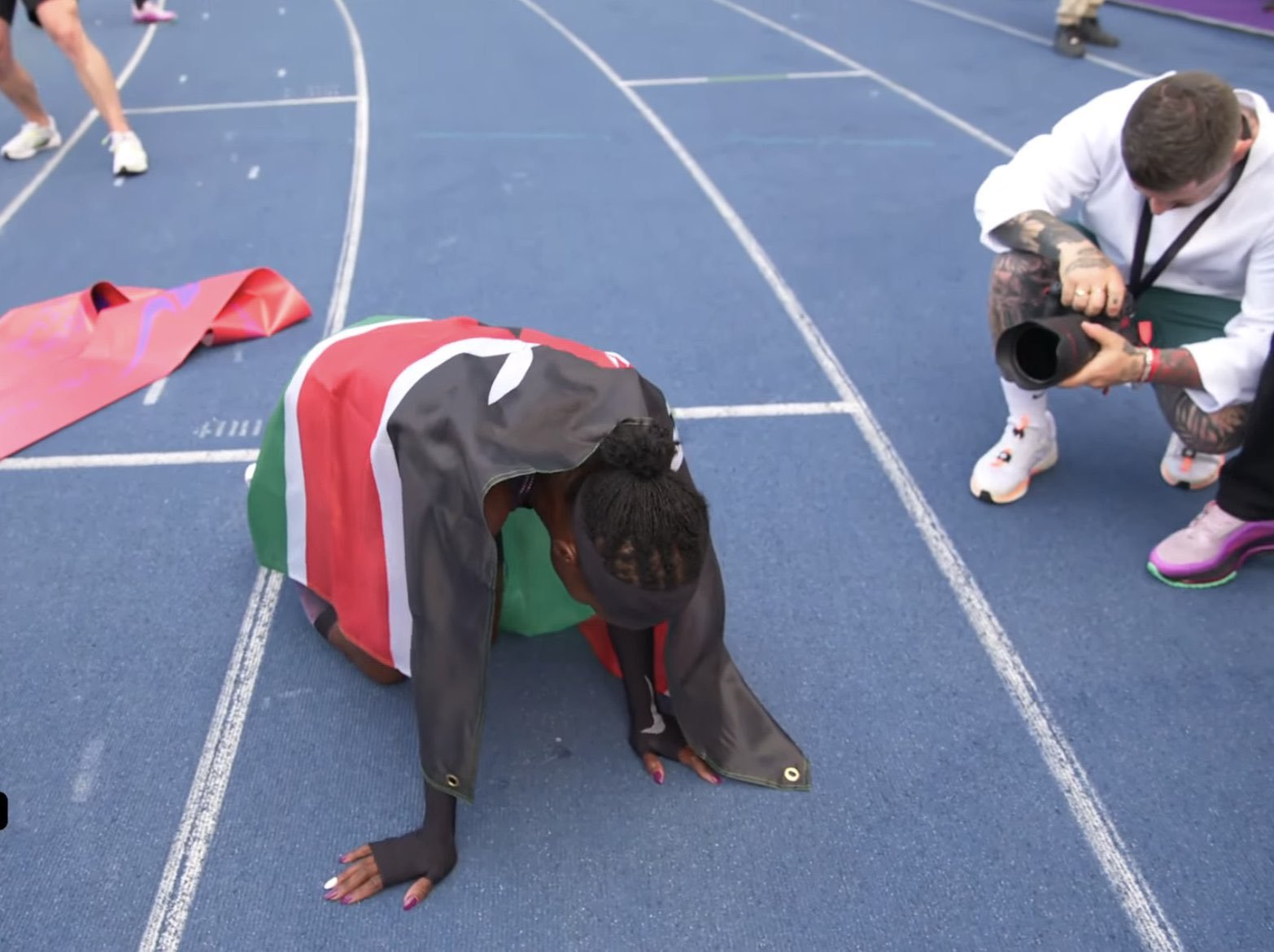



- Ruth Chepng’etich has raised questions on how to identify doping athletes
- Chepng’etich tested positive for hydrochlorothiazide (HCTZ)
- The Athletics Integrity Unit (AIU) confirmed her suspension on July 17
The recent provisional suspension of world marathon record holder Ruth Chepng’etich has raised questions on how to identify doping athletes before conducting doping tests.
The debate centres around how easy it is to discover a doping athlete during their time in training camps.
Chepng’etich tested positive for hydrochlorothiazide (HCTZ), a banned masking agent, from a sample collected on March 14.
The Athletics Integrity Unit (AIU) confirmed her suspension on July 17, noting that she had voluntarily accepted a provisional ban in April pending further investigations.
Her case now awaits a hearing before the Disciplinary Tribunal. Chepng’etich’s positive test came just months after she made history at the 2024 Chicago Marathon.
She became the first woman to run a sub-2:10 time, clocking 2:09:56. She had previously represented Kenya at the 2020 Tokyo Olympics.
Chepng’etich was expected to compete at the 2024 London Marathon before pulling out due to reported concerns about her physical form.

Science Behind How to Identify Doping Athletes
Her situation adds to a worrying list of Kenyan long-distance runners involved in doping scandals over the past decade.
Kenyan athletes such as Wilson Kipsang, Jemima Sumgong, Abraham Kiptum, Daniel Wanjiru, Asbel Kiprop, and Elijah Manangoi have tested positive for doping.
Since 2015, nearly 300 Kenyan athletes have received doping-related bans, prompting intensified efforts to fight the vice.
The Anti-Doping Agency of Kenya (ADAK) formed in 2016, has been busy keeping the athletic scene clean.
Sports scientist Dr. Kipchumba Byron believes that how to identify doping athletes should start at a more grassroots level: inside the training camps.
Dr. Kipchumba, based at KIPRUN Training Camp in Iten, says there are noticeable behavioural and physiological signs that help on how to identify doping athletes.
He said that these signs always raise suspicion among coaches, but they ignore it.
He explained that athletes who suddenly train for unusually long hours without showing fatigue could be doping.
Drastic changes in training endurance, frequent avoidance of teammates, or skipping scheduled sessions under the guise of injury are potential indicators of a doping athlete.
To support this vigilance, the camp performs blood tests every three months, analysing markers like red blood cell counts.
When numbers spike beyond expected levels, especially in athletes whose diet is already known and controlled, it’s an indication of doping.

In some cases, Dr. Kipchumba said athletes try to avoid detection by frequently travelling home or declining to see the doctors assigned to them.
He emphasised that when such patterns are observed, ADAK officers stationed in Iten are informed immediately.
Why Do Athletes Dope?
While still on how to identify doping athletes, Dr. Kipchumba noted that it’s difficult to monitor athletes who live and train outside organised camps.
A major recurring issue is the unsupervised consumption of supplements and medication, mostly obtained from unregulated sources.
He stated that even though he works closely with athletes, he refrains from offering any supplements to avoid reputational damage.
Dr Kipchumba stated that the risk of being blamed if an athlete tests positive is too high. He prefers referring athletes to certified medical facilities, but most of them reject the referral without a reason.
According to Kipchumba, many athletes are driven by a “shortcut mentality.” He recounted how chemists often serve as informal suppliers for athletes seeking quick performance boosters without medical oversight.
Ironically, he added, some athletes avoid doctors for fear of exposure and cost, and run to pharmacies for over-the-counter drugs.
Discover more from Sportsleo News
Subscribe to get the latest posts sent to your email.