





The AFCON final scandal at the 2025 Africa Cup of Nations has led to one of the most severe disciplinary actions in African football history.
The Confederation of African Football (CAF) handed out huge fines, suspensions, and other punishments after crazy scenes ruined the tournament’s final. The controversy has gotten people all over the football world talking about discipline, fair play, and the future of Africa’s biggest international competition.
The AFCON final scandal started with a controversial penalty call that went Morocco’s way late in the final in Rabat. This led to protests from Senegal’s players and coaching staff, which caused the team to leave the pitch for a short time, which upset fans and caused a long stoppage before play resumed and extra time decided the match.
What Went Down in the Final
The score was tied late in regulation time of the Africa Cup of Nations final when the referee and VAR stepped in to award Morocco a penalty. This made the Senegalese team very angry.
ALSO READ: Senegal AFCON champions: Senegal Beat Morocco 1-0 in Chaotic Final
Senegal’s coach, Pape Bouna Thiaw, told his team to leave the pitch in protest. This caused a lot of chaos, and the game was stopped for about 15 minutes before the team came back and continued playing. Morocco then missed the penalty kick, and Senegal finally scored in extra time to win 1–0.

CAF later called that dramatic sequence, which included the walk-off, confrontations with officials on the sidelines, disturbances involving fans, and other unruly behavior, a major breach of conduct. It became the center of the AFCON final scandal.
CAF’s Disciplinary Rulings
The CAF Disciplinary Board took strong action against the unrest by handing out a number of fines and bans to deal with what it called “violations of fair play, integrity, and sportsmanship” during and after the final.
Senegal Sanctions
Pape Bouna Thiaw (Head Coach)
- Suspended for five CAF games for bad behavior and ruining the game.
- Fined $100,000.
Players Suspended
- Iliman Cheikh Baroy Ndiaye: He was banned from two official CAF matches for bad sportsmanship.
- Ismaïla Sarr: Also banned from two CAF games for the same reason.
Senegalese Football Federation (FSF)
- Supporters were fined $300,000 for bad behavior.
- Players and technical staff were fined $300,000 for bad sportsmanship.
- Another $15,000 fine for the team for bad behavior after several warnings.
- Total fine for the federation: $615,000.
Sanctions on Morocco
Players suspended:
- Achraf Hakimi: Two-match ban from CAF competitions, with one match conditionally suspended for a year.
- Ismaël Saibari: Three-match ban and a $100,000 fine for unsporting conduct.
Royal Moroccan Football Federation (FRMF)
- Fined USD 200,000 for inappropriate behaviour by stadium ball boys.
- Fined USD 100,000 for misconduct involving players and staff who entered the VAR review area and obstructed the referee.
- Fined USD 15,000 for supporter use of lasers during the match.
- Total federation fine: USD 315,000.
CAF also turned down Morocco’s official protest asking for either more penalties against Senegal or the match result to be thrown out. They said that even though there was misconduct by Senegal, it didn’t mean that their win should be thrown out.
Reactions to the AFCON Final Scandal
The AFCON final scandal got a lot of people in African football talking:
- Some Moroccan fans and media said that the punishments were too lenient or didn’t fit with what happened, especially when it came to supporting their national team’s protest and the punishments that followed.
- Senegalese observers said that Senegal’s actions, while controversial, were a protest against what they thought was a bad call by the officials in a high-stakes situation.
- African football experts said that CAF’s punishments were meant to do more than just punish bad behavior in the past; they were also meant to set an example for future tournaments on how to keep discipline and respect for referees and VAR authority.
International figures also weighed in. FIFA President Gianni Infantino reportedly called the scenes at the final “ugly,” which shows how important discipline is in global football and brings attention to Africa’s biggest tournament as it gets ready for the World Cup.
What These Sanctions Mean
The AFCON final scandal has effects that go beyond fines and bans. It makes us question how high-pressure officiating decisions are handled, how teams deal with controversial calls, and how fan and team behavior are controlled in major competitions.
CAF said that their punishment was meant to protect the credibility and integrity of the Africa Cup of Nations, which is the most important tournament for the sport on the continent.
CAF made it clear that attacking match officials, entering restricted areas (like the VAR review zone), and doing things that go against the spirit of fair play are not in line with the values it wants to uphold. They say these punishments are meant to reassure everyone involved—players, coaches, fans, and officials—that bad behavior will have consequences.
Effect on Players and Tournaments in the Future
The most important thing to know about the AFCON final scandal’s sanctions is that they only apply to CAF competitions. This means that suspensions will affect future African championship qualifiers and other continental tournaments, but not tournaments like the 2026 FIFA World Cup, where both teams are still eligible to play.
The bans on players like Ndiaye, Sarr, Hakimi, and Saibari will make it harder for them to play in upcoming CAF games, which will force national team coaches to change their lineups and strategies. Thiaw’s multi-match ban, on the other hand, keeps him from taking on technical and leadership roles for Senegal in continental events.
Leadership and Accountability
Officials from both Senegal and Morocco spoke out about how serious the situation was. Senegal’s leaders said that emotions were high in an unusual match, but they also accepted CAF’s decisions as part of the duties that come with representing their countries on Africa’s biggest football stage.
ALSO READ: Karim Benzema Contract Offer Sparks Major Football Fallout
Moroccan officials also expressed disappointment that their protest was turned down, which means that legal options, such as possible appeals to sports arbitration bodies, are still being considered.
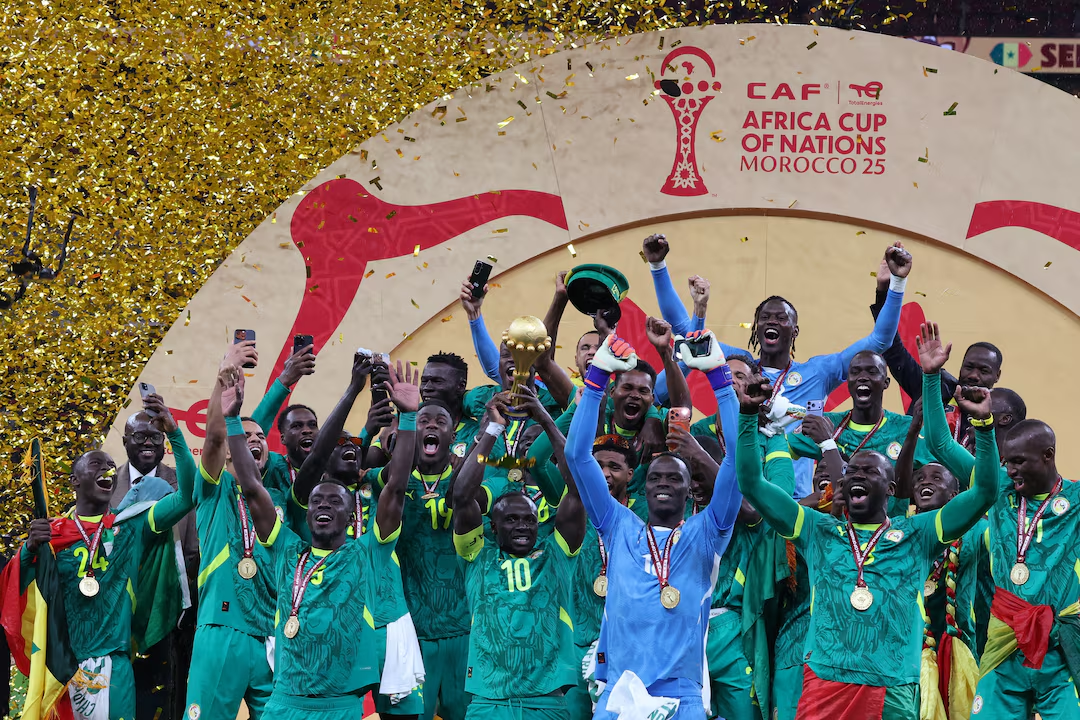
The CAF’s disciplinary message made it clear that its decisions were based on facts and violations of the CAF Disciplinary Code. It cited Articles about integrity, fair play, and how to treat match officials as the reasons for the punishments.
Conclusion
The AFCON final scandal at the 2025 Africa Cup of Nations will always be remembered in African football. What should have been a celebration of the best teams in the continent turned into a place for disciplinary investigations, fan arguments, player protests, and questions about how the competition is run.
CAF’s punishments, which include bans, fines, and official decisions, are meant to protect the tournament’s reputation and set a clear standard for what is acceptable behavior in future competitions.
The final result is still officially Senegal’s win, but the effects of the AFCON final scandal will be felt in continental competitions for months, if not years, to come as teams, officials, and fans learn from one of African football’s most controversial finales.
Discover more from Sportsleo News
Subscribe to get the latest posts sent to your email.