




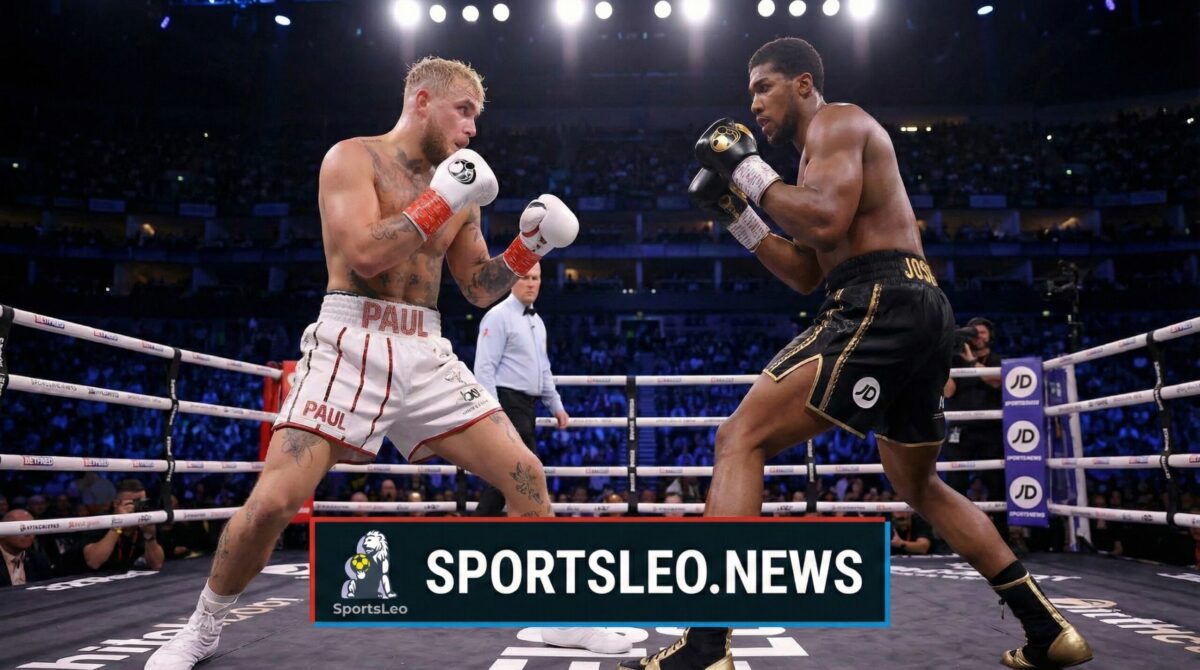
- Anthony Joshua has headlined stadiums across the world, from Wembley to Riyadh
- Yet nothing compares to what awaits him in Miami
- Anthony Joshua’s financial package for this fight stretches far beyond a single purse
The answer places him among the best paid athletes on the planet, and it says a lot about where the business of boxing is heading.
Read also: Jake Paul vs. Anthony Joshua: Judgment Day in Miami

Here is How the 100 Million Dollar Payday Breaks Down
Anthony Joshua’s financial package for this fight stretches far beyond a single purse. Several income streams combine to turn one night of work into a generational payday.
Guaranteed Purse
The foundation of the deal is Joshua’s guaranteed base pay. He is set to earn between 65 million and 85 million dollars, whether he wins or loses. That figure alone makes this one of the richest nights in the history of professional boxing. It reflects both his star power and the scale of Netflix’s investment in turning the event into a global attraction.
Sponsorships and Endorsements
Joshua remains one of the most marketable athletes in sport. His partnerships with Under Armour, Hugo Boss, Beats by Dre, and JD Sports all stand to benefit from the global visibility this fight provides. Several brands are expected to launch new campaigns around fight week, bringing him an additional 10 million to 15 million dollars in endorsement income tied specifically to this event.
Read also: Top 10 richest boxers in the world
Performance and Viewership Bonuses
Netflix does not rely on traditional pay per view figures. Instead, it measures success through global streaming numbers and engagement.
Fighter contracts for this event reportedly include incentives linked to viewership milestones. If the fight surpasses certain live audience thresholds, particularly around the 70 million live viewer mark, Joshua could collect another 5 million to 10 million dollars in performance and viewership related bonuses.
Documentary and Merchandising Rights
Netflix will release an exclusive behind the scenes documentary series that follows the build up, fight week, and aftermath of the event. Joshua will receive a share of the revenue generated by that series, along with a portion of the proceeds from merchandise sales connected to the fight. These items include branded gloves, clothing, and limited edition collectibles. These rights alone could add another 2 million to 3 million dollars to his overall payout.
When you add all of these revenue streams together, Anthony Joshua’s total earnings from the fight are likely to exceed 110 million dollars, and could climb even higher once all bonuses and streaming incentives are finalized.
Read also: Tyson Fury: 6 Things to know about the British heavyweight
The Man Behind the Deal
The financial structure behind this fight was engineered by Nakisa Bidarian, Jake Paul’s business partner and the co founder of Most Valuable Promotions, better known as MVP.
Bidarian is a former Chief Financial Officer of the UFC and was part of the team that helped broker the organization’s multi billion dollar sale to WME IMG. After leaving the UFC, he turned his focus to boxing, bringing with him an approach that blends corporate discipline, modern media strategy, and an understanding of how younger audiences consume sport.
His philosophy is to treat every fight as a global entertainment property instead of a single night event. By combining influencer culture, sports storytelling, and streaming economics, Bidarian created a system where fighters become partners in the spectacle rather than employees of promoters.
His success promoting Amanda Serrano vs Katie Taylor at Madison Square Garden and Jake Paul vs Mike Tyson for Netflix gave him the leverage to pitch this new blockbuster idea. Under his system, a fighter of Joshua’s stature can negotiate a contract that looks more like a Hollywood deal than a traditional boxing purse agreement.
Why Joshua Said Yes
When the fight was first mentioned publicly, many fans assumed it was a joke. The idea of an Olympic gold medalist and two time heavyweight champion facing a YouTuber seemed ridiculous. Yet Anthony Joshua and his team saw an opportunity others missed.
The Timing
Joshua had recently rebuilt momentum after two losses to Oleksandr Usyk. With Tyson Fury and Usyk occupied with unification commitments, and other contenders either inactive or unattractive from a commercial standpoint, Joshua needed a new stage.
The Jake Paul fight offered him three things that no other matchup could match at that moment, relevance, global exposure, and a financial package unmatched by any available opponent.
The Risk and the Reward
The bout is a sanctioned heavyweight contest, but it is limited to eight rounds. Jake Paul is expected to weigh around 225 pounds, while Joshua will likely come in near 245. Physically, the matchup favors Joshua. Financially, the risk is minimal compared to the reward.
His reputation as a serious professional is already secure. Even if Paul manages to survive the distance, it will not significantly damage Joshua’s legacy among boxing fans. If Joshua wins convincingly, especially by knockout, the footage will be replayed endlessly across social media and global sports coverage.

A New Audience
Jake Paul brings a younger, highly engaged digital audience that traditional boxing often struggles to reach. For Joshua, this fight is not only about money. It is also about expanding his personal brand into new markets and age groups. Millions of fans who have never watched a heavyweight title fight will see him for the first time through this Netflix event.
Read also: 6 Famous Puerto Rican Boxers in History
The Streaming Revolution Comes to the Ring
For decades, boxing’s business model has relied on pay per view, with fans paying high prices for individual events. That model is under pressure as younger audiences move toward streaming platforms and on demand content.
Netflix’s move into live combat sports represents a significant shift. By making high profile fights available as part of the regular subscription, the company removes financial barriers for casual viewers. It trades single event sales for massive global reach, which is exactly what brands and fighters crave.
For Anthony Joshua, the benefit is clear. Instead of three million pay per view buyers, he could reach more than 70 million live viewers, and hundreds of millions more through replays, clips, and documentaries published in the weeks and months after the fight.
What used to be a boxing contest for a paying niche now becomes a piece of global content that travels far beyond traditional sports media.
Read also: How Mike Tyson Hangover movie role funded his drug habit
How His Payday Ranks in Boxing History
To understand how much Anthony Joshua will make fighting Jake Paul, it helps to compare his projected earnings to other famous boxing purses.
| Fight | Year | Fighter Earnings | Platform |
|---|---|---|---|
| Floyd Mayweather vs Manny Pacquiao | 2015 | 250 million dollars (Mayweather) | Showtime pay per view |
| Tyson Fury vs Deontay Wilder II | 2020 | 35 million dollars (Fury) | ESPN and FOX pay per view |
| Anthony Joshua vs Andy Ruiz II | 2019 | 40 million dollars (Joshua) | DAZN and Sky Sports |
| Jake Paul vs Mike Tyson | 2025 | 50 million dollars (Paul) | Netflix |
| Jake Paul vs Anthony Joshua | 2025 | 100 to 110 million dollars (Joshua) | Netflix |
Anthony Joshua will not match Mayweather’s record breaking payday, but his purse surpasses every other active heavyweight’s earnings for a single fight. What makes it even more notable is that this money arrives without title politics, sanctioning body fees, or lengthy negotiation with multiple promoters.
The Bigger Picture for Boxing
Anthony Joshua’s agreement for the Jake Paul fight is about more than one man’s earnings. It reflects a changing relationship between fighters and the business side of boxing.
New Negotiation Power
Joshua’s contract shows that top fighters can negotiate directly with streaming platforms and keep a larger share of the revenue. They can maintain creative control over their image and career direction rather than surrendering everything to promoters and networks.
Streaming as the New Arena
If this fight performs well, other platforms such as Amazon Prime Video, Apple TV Plus, and Disney Plus are likely to look for similar opportunities in boxing and combat sports. In that scenario, boxing becomes a key asset in the battle for global streaming dominance.
Fans Benefit from Accessibility
Without pay per view fees, world class boxing becomes more accessible. Fans who might never have paid extra for a single event can now watch championship level talent through their existing subscriptions. This helps grow the sport beyond its traditional hardcore fan base.
A Different Kind of Fame
Netflix’s global reach will make Joshua a familiar name in households that may never have watched his earlier fights. For a younger generation, he will not only be a former heavyweight champion. He will also be a central figure in one of Netflix’s most ambitious live sports experiments.
How Joshua Built the Leverage to Make It Happen
Anthony Joshua has always treated boxing as both a sport and a business. Through his company 258 Management, he controls his commercial decisions and long term strategy. He has invested in real estate, technology startups, and community projects, positioning himself as more than just an in ring talent.
This fight is a direct result of that mindset. Joshua is not seeking validation. He already has it. What he is seeking now is control over his financial and professional future.
Jake Paul needed this fight to cement his transition from influencer to legitimate prizefighter. Joshua did not need it in the same way, and that leverage allowed him to demand and receive one of the biggest paydays in modern sports.
The Cultural Collision
On one level, the fight is an athlete versus entertainer matchup. On a deeper level, it is a collision of two cultures.
Anthony Joshua represents the traditional path, Olympic pedigree, structured training, and a steady rise through the amateur and professional ranks. Jake Paul represents the digital world, social media fame, disruption, and a direct relationship with his audience.
Their meeting symbolizes how sport and entertainment have merged. It may upset purists, but it pulls new viewers into the sport and gives boxing renewed relevance in a crowded media landscape.
The Final Count, How Much Will Anthony Joshua Make Fighting Jake Paul?
When all the numbers are tallied, Anthony Joshua is expected to earn between 100 million and 120 million dollars from this fight. His guaranteed purse forms the bulk of that total, while sponsorship deals, performance bonuses, and streaming related income push the figure even higher.
That amount places him among the highest paid athletes in the world for the year. It is more than most boxers will earn in an entire career, and he will earn it in a single night in Miami.
When Joshua walks to the ring, he will not only be fighting Jake Paul. He will be demonstrating what modern boxing can look like when business intelligence, entertainment value, and athletic excellence all align.
Jake Paul brought the attention. Nakisa Bidarian constructed the framework. Anthony Joshua will leave with the reward.
He has shown that in the current era, greatness is not defined only by belts or records. It is also defined by timing, adaptability, and the willingness to seize opportunities that others dismiss. Joshua’s power has always been obvious inside the ropes. Now he is proving that his influence outside the ring can be just as devastating.
