




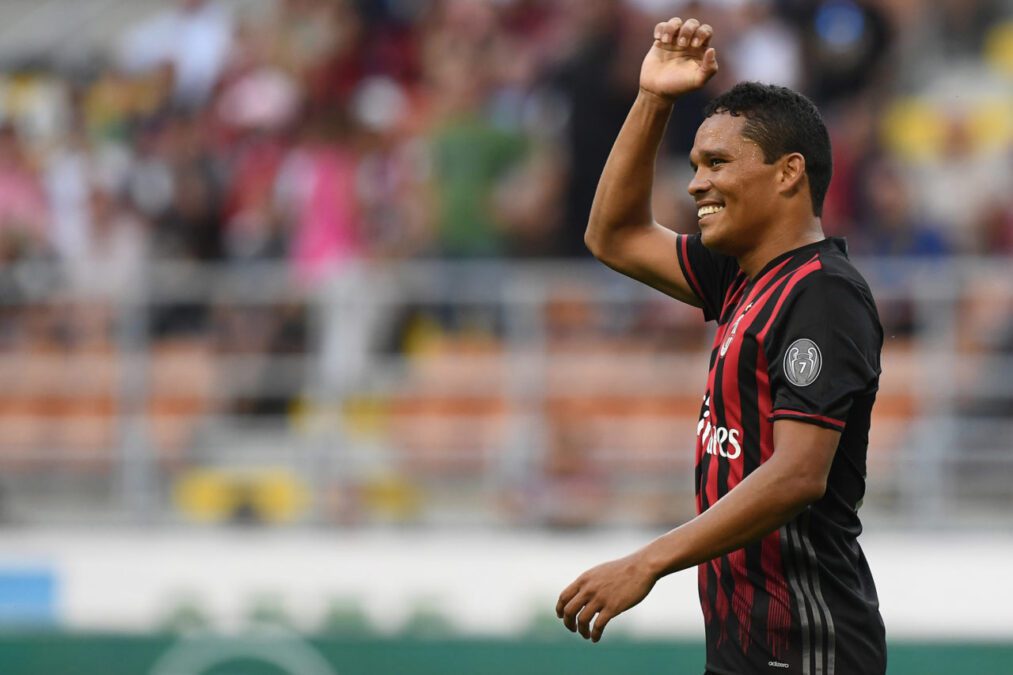
- Carlos Bacca is one of the prominent footballers who come from humble backgrounds
- His father was a fisherman and his mother sold fish
- Bacca struggled before making it into professional football. He worked as a bus conductor and fisherman so as to pay his bills.
Football stars in Europe are among the richest athletes in the world. The majority of rich footballers, including Carlos Bacca, have built their fortune from the sport.
Most professional footballers from South America and Africa are from humble backgrounds. The rise of poor footballers from humble backgrounds like Ronaldinho, Dani Alves, Antonio Valencia, Angel Di Maria and Roberto Firmino have inspired many young people.
ALSO READ: Faiq Bolkiah Net Worth: How Much is the Richest Footballer Worth?
Bacca is one of the famous footballers who had a tough upbringing. The Colombian was a bus conductor before making it as a professional footballer. He even practiced fishing as a means of surviving.

Carlos Bacca Childhood
The renowed footballer was born in Puerto Colombia on September 8, 1986. Bacca’s parents struggled to make a living. His father, Gilberto Bacca, was a fisherman, whereas his mother helped sell the fish.
ALSO READ: The Richest Wrestlers in 2026: A Close Look at Who Makes the Most Money
Carlos often accompanied his father fishing as a child. He had no other option because that was the only means of ensuring the family’s welfare. Carlos’ mother noticed that he loved football more than anything else as a child. He rejected toy cars as he only wanted football. As Carlos was growing up, his father used to grant him some time so he could play football with other boys in the streets.
ALSO READ: Diogo Dalot Biography: Childhood, Career and Net Worth
Carlos’ parents enrolled him at a local football academy at the age of nine. His passion for football grew more as he played at the academy. According to his trainer at the academy, Carlos would create time and train himself how to head and kick with other few boys.
The striker got a chance to play for Atletico Junior in 2006. However, Things didn’t go well for Carlos, who was by then 21 at Atletico Junior.
The striker decided to join the transport industry, where he worked as a bus conductor. He also practised fishing to meet his fast, dwindling finances. At that time, Carlos was also taking care of his parents, who had done their best to support him.
Carlos Bacca Success
The Colombian striker became a star after returning on loan from Barranquilla. He got more playing time at Atletico Junior, where he proved his goalscoring prowess. Carlos helped Atletico Junior win the Categoria Primera A during the 2010-11 season.
Carlos got the attention of Club Brugge scouts hence joining the Belgian club in the summer of 2011. He spent two seasons at Club Brugge, scoring 28 goals in 45 appearances.
Bacca joined Sevilla in 2013, where he continued with his goalscoring ability. During his two seasons with Sevilla, Bacca scored 34 goals in 72 appearances. He helped Sevilla win the UEFA Europa League two times, 2013-14 and 2014-15.
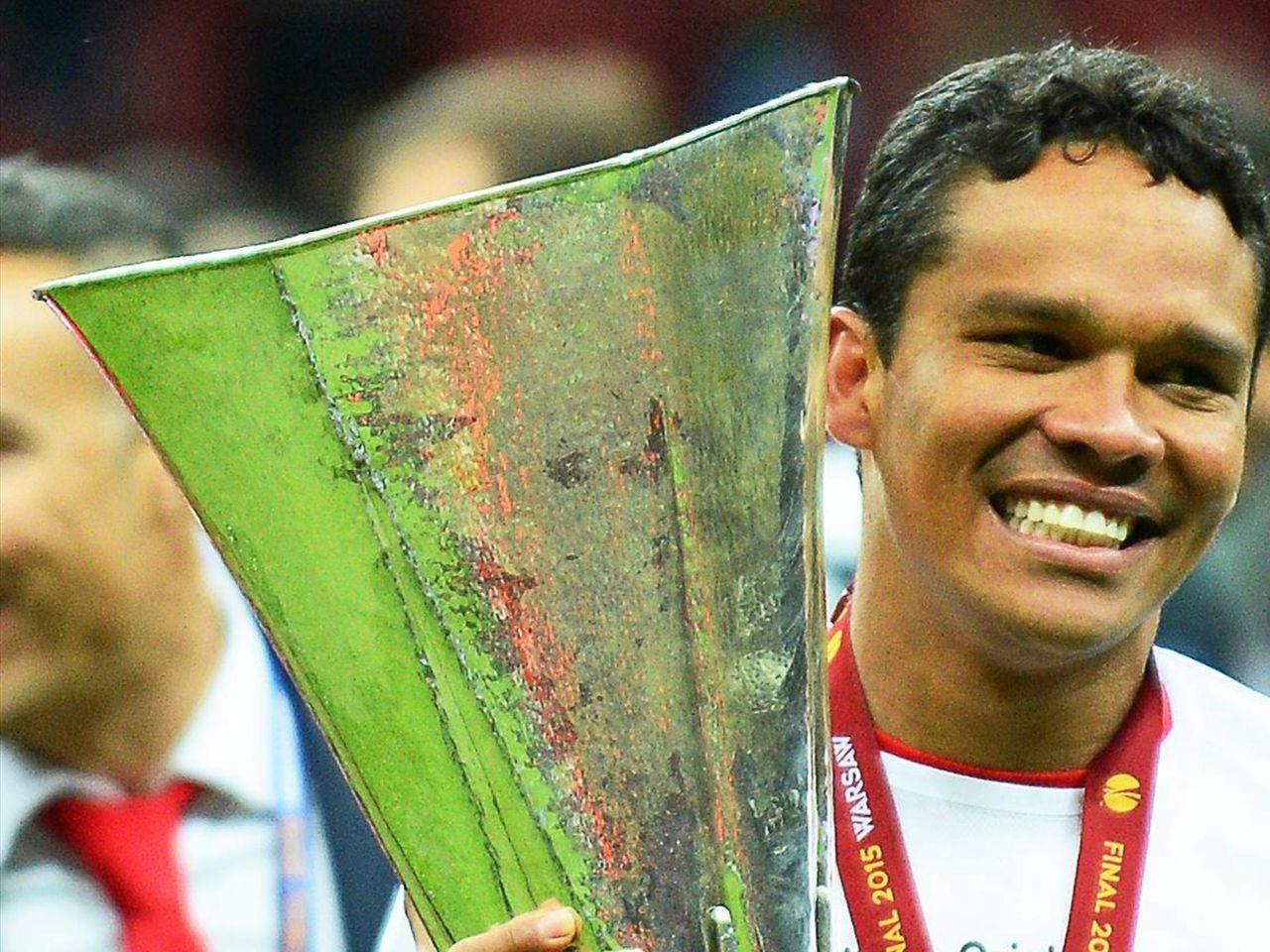
The Colombian star joined AC Milan in 2015 and won the Supercoppa Italiano in 2016. He spent three years with the Italian giants before joining Villareal in 2018. Carlos was part of the Villareal team that won the 2020-21 UEFA Europa League after defeating Manchester United in penalty shoot-outs.
ALSO READ: Meet Liz Mills, the world’s first female basketball coach
Carlos spent the 2021-22 season at Granada. He returned to his boyhood club, Atletico Junior, in Colombia in the summer of 2022. He is currently playing for Colombian club Atletico Junior.
International Career with Colombia
Carlos Bacca’s great play at club level finally got him a spot on the Colombia national team. He made his senior debut for Los Cafeteros in 2010, when Colombia was trying to build a strong group of players after not making it to the 2010 FIFA World Cup.
His ability to score goals in the Colombian league and later in Europe made the national team coaches believe he could be a reliable option in attack.
Bacca became part of what many fans consider Colombia’s “golden generation.” He shared a locker room with some of the country’s biggest football stars during this time, such as playmaker James Rodríguez, striker Radamel Falcao, and winger Juan Cuadrado.
These players worked well together to make Colombia one of the best teams in South America. James Rodríguez often played behind the striker, making creative passes. Cuadrado’s speed on the wings and Falcao’s leadership made the attack stronger.
Bacca mostly played as a central forward, where he used smart positioning and quick finishing to score goals in the penalty area.
Falcao was usually the first-choice striker, but Bacca was still an important part of the team because he was always good at scoring goals.
He was useful in high-pressure games because he had played in European competitions before, especially with Sevilla and AC Milan. Coaches often used him as a backup attacker or as a game-changing substitute when the team needed goals late in games.
Bacca played for Colombia in big continental tournaments like the Copa América. He was part of the team for the 2015 Copa América in Chile and the 2016 Copa América Centenario in the US.
Colombia came in third in the 2016 tournament after beating the host country. This was one of the best performances by the country in a long time. Bacca played in a number of games and helped the team attack throughout the tournament.
One of his most memorable moments was when Colombia played Peru in the quarterfinals of the 2016 Copa América Centenario. The game ended in a tense goalless draw, and the penalty shoot-out decided the winner.
Bacca stepped up to take one of the penalties, which showed how much the coaches trusted him, even though Colombia lost in the shoot-out. Despite the disappointment, his inclusion in such crucial moments showed his importance to the national setup.
Bacca scored a lot of goals for Colombia in friendlies, World Cup qualifiers, and international tournaments during his career. His goals often came in close games when Colombia needed someone to finish the play inside the box.
Even though he wasn’t a regular starter, his professionalism and work ethic earned him the respect of both his teammates and coaches.
Carlos Bacca’s international career may not have been as well-known as some of his teammates’, but he was an important part of one of Colombia’s best football eras. His rise from being a fisherman and bus driver in Puerto Colombia to representing his country on the world stage is one of the most inspiring parts of his football story.
Is Carlos a good player?
Carlos Bacca was one of the best strikers during his prime days. The prolific goalscorer is still renowned for his impressive performance. He can easily score when with the ball in the opposition’s box. The Colombian striker is strong, skilful, quick and has eye for goal.
Carlos Bacca’s personal life
Carlos Bacca, who was previously a bus conductor and a fisherman, is among the richest players in South America. The Colombian star has a net worth of $5 million. He has earned his wealth from professional football.
Bacca is one of the most religious footballers in the world. The lethal striker attributes his success in football to God. He is a member of the Evangelical Christian faith. At one time, it was rumoured that Bacca wanted to join Roma so he can close to the Pope.
The footballer is married to his childhood girlfriend Shayira Santiago. The two keeps their love life private as they avoid controversies. They have two kids, Valentina Bacca and Carlos Daniel Bacca.
Conclusion
Carlos Bacca’s story is a strong reminder that where you start doesn’t always determine how successful you will be; it’s your determination to keep going that does.
Bacca’s early life was full of hardship and sacrifice. He helped his father fish on the shores of Puerto Colombia to support the family, and then he worked as a bus conductor to make ends meet. But with discipline, faith, and an unshakable belief in his talent, he turned problems into motivation.
His rise to fame in Europe—winning several UEFA Europa League titles, playing for top clubs like Sevilla, AC Milan, and Villarreal, and representing Colombia on the international stage—shows not only his ability to score goals but also his strength.
He may not always have been the biggest star of his generation, but he earned respect wherever he played because he was always professional, humble, and consistent.
Bacca’s story is more than just trophies and stats; it’s also relatable to regular people. He is a symbol of many young football players from poor families who want to use sports to change their lives.
His career shows that failures don’t mean the end, that being turned down can be a chance to change direction, and that not giving up can open doors that once seemed permanently closed.
Carlos Bacca’s legacy is not just about the goals he scored or the titles he won. It’s also about hope, hard work, and the bravery to keep going after a dream, no matter how hard it may be at first.
FAQs
1. Who is Carlos Bacca?
Carlos Bacca is a Colombian professional footballer who plays as a striker. He is best known for his time at Sevilla, AC Milan and Villarreal, and for representing the Colombia national team.
2. Where was Carlos Bacca born?
He was born in Puerto Colombia, a coastal town in Atlántico Department, Colombia, on September 8, 1986.
3. How old is Carlos Bacca in 2026?
Bacca is 39 years old as of the time of this writing.
4. What position does Carlos Bacca play?
He plays as a centre-forward (striker).
5. Which clubs has Carlos Bacca played for?
Bacca has played for several clubs including Atletico Junior, Barranquilla FC, Club Brugge (Belgium), Sevilla (Spain), AC Milan (Italy), Villarreal (Spain) and Granada before returning to Atletico Junior.
6. Did Carlos Bacca really work as a bus conductor?
Yes. Before becoming a professional footballer, Bacca worked as a bus conductor and also helped his father with fishing.
7. What trophies has Carlos Bacca won?
He has won multiple trophies, including two UEFA Europa League titles with Sevilla (2013–14 and 2014–15), the Supercoppa Italiana with AC Milan (2016), and another UEFA Europa League title with Villarreal (2020–21).
8. How many goals did Carlos Bacca score for Sevilla?
During his time at Sevilla, he scored over 30 goals in official competitions and became one of the club’s key players in their Europa League triumphs.
9. Did Carlos Bacca play for the Colombia national team?
Yes. He represented Colombia internationally and played alongside stars such as James Rodríguez, Radamel Falcao and Juan Cuadrado in tournaments including the Copa América.
10. What is Carlos Bacca’s net worth?
His estimated net worth is around $5 million.
11. Is Carlos Bacca married?
Yes. He is married to his childhood girlfriend, Shayira Santiago.
12. What religion does Carlos Bacca follow?
Carlos Bacca is an Evangelical Christian and has often spoken publicly about how his faith helped him through difficult moments in his life and career.
13. What is Carlos Bacca known for on the pitch?
He is known for his sharp positioning, quick finishing inside the penalty area, work rate, and ability to score important goals in crucial matches.
15. Which country does Carlos Bacca represent?
He represents Colombia in international football.