










- The estimated Paul Caddick net worth stands at $300 million (£225 million) in 2026, driven by a diversified portfolio in civil engineering, property development, and sports ownership.
- As the founder of Caddick Group PLC and co-founder of Moda Living, he controls a development pipeline exceeding £2.5 billion, specializing in the UK’s Build-to-Rent sector.
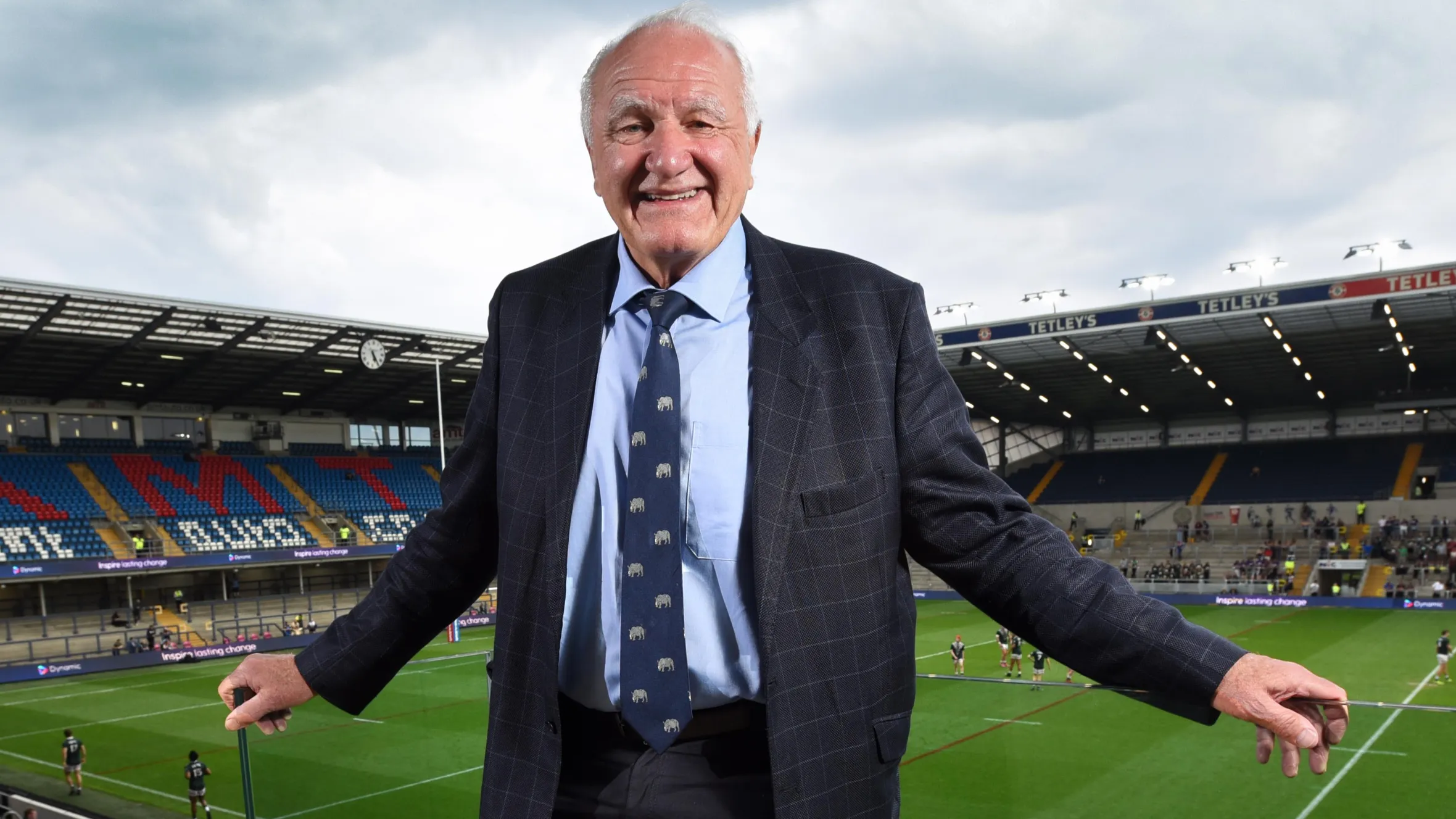
- Caddick owns a 76% controlling stake in Leeds Rugby, the parent company of the Leeds Rhinos, and was instrumental in the £45 million redevelopment of Headingley Stadium.
Table of Contents
Paul Caddick represents the ultimate fusion of elite sport and high-stakes commerce. His journey from the muddy rugby pitches of Yorkshire to the boardrooms of a multi-billion-pound construction empire is a masterclass in strategic pivoting. According to Celebrity Net Worth and various UK Rich Lists, the Paul Caddick net worth is currently valued at $300 million.
This wealth is not merely a static figure. It is a living ecosystem of assets ranging from industrial warehouses to the iconic Headingley Stadium. Caddick has transformed his early setbacks into a blueprint for corporate longevity and sporting excellence.
ALSO READ: Billy Boston Dies Aged 92: Wigan Warriors Legend and Rugby League Trailblazer Passes Away
Through his leadership at Caddick Group PLC, he has redefined the skyline of northern England. His influence extends beyond physical structures, anchoring the financial stability of the Leeds Rhinos in an increasingly volatile Super League economy.

Paul Caddick Quick Facts
| Feature | Detail |
|---|---|
| Full Name | Paul Caddick |
| Year of Birth | 1950 (Age: ~76) |
| Nationality | British (Yorkshire, England) |
| Key Businesses | Caddick Group PLC, Moda Living, Caddick Construction |
| Sports Ventures | Leeds Rhinos (76% Stake), Headingley Stadium |
| Estimated Net Worth | $300 Million USD / ~£225 Million GBP |
How Has the Paul Caddick Net Worth Evolved Through Civil Engineering?
The foundation of the Paul Caddick net worth was laid in 1979 with the establishment of Caddick Group. Initially a modest civil engineering outfit, the firm quickly capitalized on the industrial landscape of West Yorkshire. Caddick’s background in civil engineering provided the technical expertise needed to navigate complex infrastructure projects.
By the 1990s, the company shifted toward high-value property development and large-scale construction. This transition allowed the group to secure massive contracts for retail parks, distribution centers, and office hubs. The Wakefield 41 Business Park remains a cornerstone of this early expansion phase.
ALSO READ: How Naomi Jelagat ditched football for Kenyan rugby
Today, Caddick Construction operates as a subsidiary that generates hundreds of millions in annual turnover. Recent financial reports from 2025 indicate a significant uptick in profit margins due to high-efficiency building techniques. The group’s ability to remain private has allowed Caddick to reinvest capital without shareholder interference.
The synergy between civil engineering and commercial real estate created a self-sustaining wealth machine. As land values in the North of England surged, so did the appraisal of Caddick’s land banks. This strategic accumulation of assets ensures long-term fiscal stability regardless of market volatility.
What Role Does Moda Living Play in His Billion-Pound Wealth Portfolio?
In the last decade, the Build-to-Rent (BTR) sector has become the crown jewel of the Caddick business empire. Through Moda Living, a joint venture co-founded by Paul and Johnny Caddick, the family has pioneered high-end residential living. This model focuses on long-term rental income rather than one-off sales.
Moda Living’s portfolio is staggering, with projects like Angel Gardens in Manchester setting new standards for urban development. This 35-story tower alone represents a valuation of over £150 million. The BTR model provides a recurring revenue stream that significantly bolsters the Paul Caddick net worth.
By 2026, Moda Living has expanded its pipeline to include major sites in Birmingham, Leeds, and Glasgow. These developments are often backed by institutional investors like Apache Capital, highlighting the credibility of the Caddick brand. The brand emphasizes “wellness-led” living, incorporating gyms, rooftop terraces, and co-working spaces.
ALSO READ: The Late Cornal Hendricks life, career, family
This pivot into residential property has insulated the group from the decline of traditional retail space. While other developers struggled with the “high street death,” Caddick’s focus on high-density urban living proved visionary. The Moda brand is now synonymous with the revitalization of UK city centers.
How Did the 1996 Leeds Rhinos Acquisition Reshape UK Rugby?
In 1996, Paul Caddick made a move that would forever change the landscape of British sport. He purchased Leeds CF&A Co Ltd, taking control of the debt-ridden Headingley Stadium and the Leeds Rhinos. At the time, the club was facing an uncertain future in the newly formed Super League.
Caddick partnered with Gary Hetherington to create a management duo that would dominate the sport for decades. His 76% controlling interest provided the financial backbone needed to recruit elite talent. Under his tenure, the Rhinos transformed from perennial underachievers into a global rugby powerhouse.

The “Golden Generation” of players like Kevin Sinfield and Rob Burrow was supported by Caddick’s investment in world-class training facilities. He didn’t just fund the team; he professionalized the entire organizational structure. This included the groundbreaking dual-code partnership with Leeds Tykes (now Leeds Carnegie) in rugby union.
The financial health of the Rhinos is a direct reflection of Caddick’s business acumen. While other clubs face insolvency, the Rhinos utilize Headingley’s hospitality and event capabilities to generate non-matchday revenue. This diversified income stream is a rarity in the world of professional rugby league.
Why Did a Career-Ending Neck Injury Lead to a Construction Dynasty?
The story of Paul Caddick is one of resilience. Before becoming a tycoon, he was a formidable rugby player, competing in both union and league. His physical presence on the field was a precursor to his aggressive and successful business tactics.
However, tragedy struck in 1980 when a scrum collapsed during a match, resulting in a severe neck injury. The injury effectively ended his playing career at the age of 30. Faced with the end of his athletic dreams, Caddick turned his full attention to the construction business he had started just months prior.
This injury was the catalyst for his professional evolution. He channeled the discipline and competitive drive of professional rugby into the civil engineering sector. Many analysts suggest that without this forced retirement, the scale of the Caddick Group might never have been realized.
The injury also cemented his emotional connection to the sport. His later acquisition of the Rhinos was seen by many as a way to remain at the heart of the game he loved. It was a “return to the fold,” but this time as the architect of the club’s future rather than a player on the field.
What is the 2026 Market Valuation of the Caddick Group PLC?
As of 2026, the market valuation of the various entities under the Caddick umbrella exceeds £1.5 billion. This includes the development value of ongoing projects and the equity held in completed assets. The Paul Caddick net worth is deeply intertwined with the performance of these industrial and residential divisions.
Caddick Construction alone reported a turnover exceeding £500 million in the previous fiscal year. The group has successfully navigated the inflationary pressures of the construction industry by maintaining a strong balance sheet. Their “design and build” capability allows for higher margins compared to traditional contractors.
Furthermore, the group’s land bank is one of the most strategic in the UK. By securing land in key logistics corridors, Caddick has profited from the e-commerce boom. Massive distribution hubs for international retailers provide steady lease income and high asset appreciation.
The integration of construction and development within one group reduces third-party costs. This vertical integration is a key factor in why the Caddick family remains among the wealthiest in the North of England. Their ability to manage the entire lifecycle of a project—from planning to property management—is a significant competitive advantage.
How Has Headingley Stadium’s Redevelopment Fueled Financial Growth?
The £45 million redevelopment of Headingley Stadium completed in 2019 was a masterstroke of sports finance. Paul Caddick spearheaded this project, which involved building new stands for both the rugby and cricket sides of the ground. This unique “back-to-back” stand configuration maximized the utility of the site.
The new facilities include high-end corporate boxes and a banquet hall that can host hundreds of guests. These additions have exponentially increased the club’s ability to generate revenue outside of the 80 minutes of play. In 2026, Headingley is regarded as one of the premier conferencing venues in the region.
From a net worth perspective, the stadium is a prized asset on the balance sheet of Leeds CF&A. Its modernization increased the overall valuation of the sports franchise. It also secured Headingley’s status as an international cricket venue, bringing global prestige to the city of Leeds.
Caddick’s vision for Headingley was never just about sport; it was about urban regeneration. The stadium now serves as an anchor for the local community, supporting jobs and local businesses. This symbiotic relationship between the club and the city is a testament to Caddick’s long-term planning.
What Is the On-the-Ground Perspective of Caddick’s Influence in Yorkshire?
In the pubs of Headingley and the cafes of Leeds, Paul Caddick is often viewed as the “steady hand” behind the Rhinos. While many modern sports owners are seen as detached billionaires, Caddick’s local roots resonate with the fan base. He is a man of Yorkshire who has reinvested his success back into the county.
Local fans recall the dark days of the mid-90s when the club’s existence was threatened. To them, Caddick is more than a businessman; he is the savior of a cultural institution. The stability he has provided allows fans to focus on the performance on the pitch rather than the financial turmoil off it.
Social media sentiment in 2026 reflects a deep respect for the Caddick family’s commitment to the Leeds Rhinos Foundation. This charitable arm works with thousands of young people across the region, using rugby as a tool for social change. This “ground-level” impact is where his legacy is most visible to the average citizen.
However, there is also the “Moda effect” on the city’s skyline. For many young professionals in Leeds, Caddick’s developments have provided high-quality housing in areas that were previously derelict. He has fundamentally changed how people live and play in the city, blending the worlds of property and sports seamlessly.
SportsLeo Forecast: What Does the Next Decade Hold for the Caddick Empire?
The outlook for the Paul Caddick net worth remains bullish through 2030. The continued expansion of Moda Living into secondary UK cities like Hove and York will provide a significant boost to the group’s valuation. As the BTR sector matures, Caddick Group is well-positioned to exit some investments for massive capital gains.
In the sporting world, the Leeds Rhinos are expected to benefit from the new IMG grading system. Given the club’s infrastructure and financial stability, thanks to Caddick, they are virtually guaranteed a Grade A status. This ensures their place in the top flight and provides long-term security for broadcasting revenue.
We anticipate that Caddick Group will become a leader in “Smart Infrastructure.” By integrating AI-driven energy management into their commercial buildings, they will attract premium tenants. Paul Caddick’s legacy will likely be defined by his ability to modernize traditional industries through technology and strategic investment.
Final Summary
- The of $300 million is built on a foundation of civil engineering excellence and strategic property development through Caddick Group PLC.
- His ownership of the Leeds Rhinos has provided the financial and infrastructural stability required for the club to become a dominant force in European rugby.
- Through Moda Living, he has successfully pivoted into the Build-to-Rent market, securing a multi-billion-pound residential pipeline.
- His career serves as a quintessential example of how elite sporting discipline can be applied to achieve massive success in the corporate sector.
People Also Ask
What is Paul Caddick net worth in 2026?
As of 2026, Paul Caddick net worth is estimated to be approximately $300 million (£225 million), primarily derived from his success in construction and property development.
Does Paul Caddick own the Leeds Rhinos?
Yes, Paul Caddick is the majority owner of Leeds Rugby, holding a 76% controlling interest in the company that operates the Leeds Rhinos and Headingley Stadium.
How did Paul Caddick make his money?
Caddick founded Caddick Group PLC in 1979, which grew into a massive civil engineering and property development firm. He further expanded his wealth through Moda Living and industrial real estate.
What happened to Paul Caddick’s rugby career?
Paul Caddick was a professional rugby player whose career was cut short in 1980 due to a serious neck injury sustained during a collapsing scrum.
Who is the chairman of Caddick Group?
Paul Caddick remains the Founder and Chairman of Caddick Group PLC, though he has increasingly delegated operational leadership to his son, Johnny Caddick.